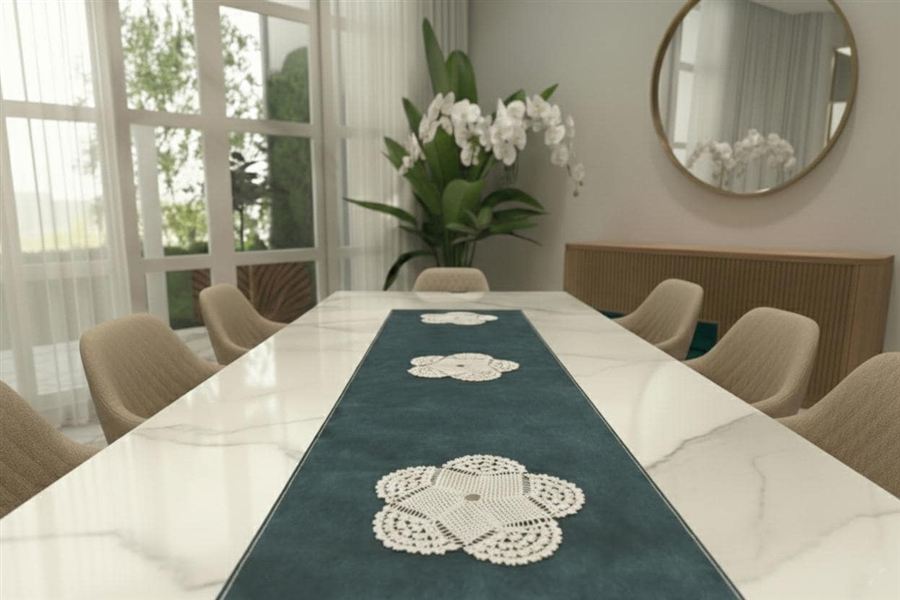
 Heirloom
Table Runners & Placemats
Hand-stitched dining pieces — Pueblo and Crazy Horse leather, some joined with Turkish needle lace and crochet.
See the pieces → Custom Order

Handcrafted in Istanbul · Stitched with patience
Every Paz piece is drawn, cut and saddle-stitched by hand with waxed thread — one hide, two needles, zero shortcuts. No two are ever identical.
The Collection
Designed on paper, resolved in leather. Each piece leaves the bench only when the maker would carry it himself.
Heirloom
Hand-stitched dining pieces — Pueblo and Crazy Horse leather, some joined with Turkish needle lace and crochet.
See the pieces →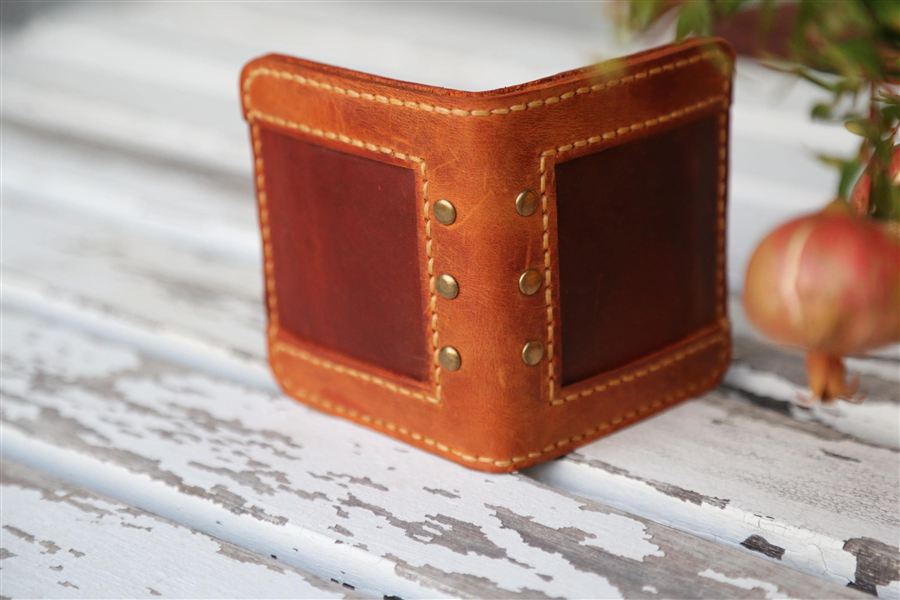
Cash pockets, card slots, antique rivets — saddle-stitched to outlive fashion.
See the pieces →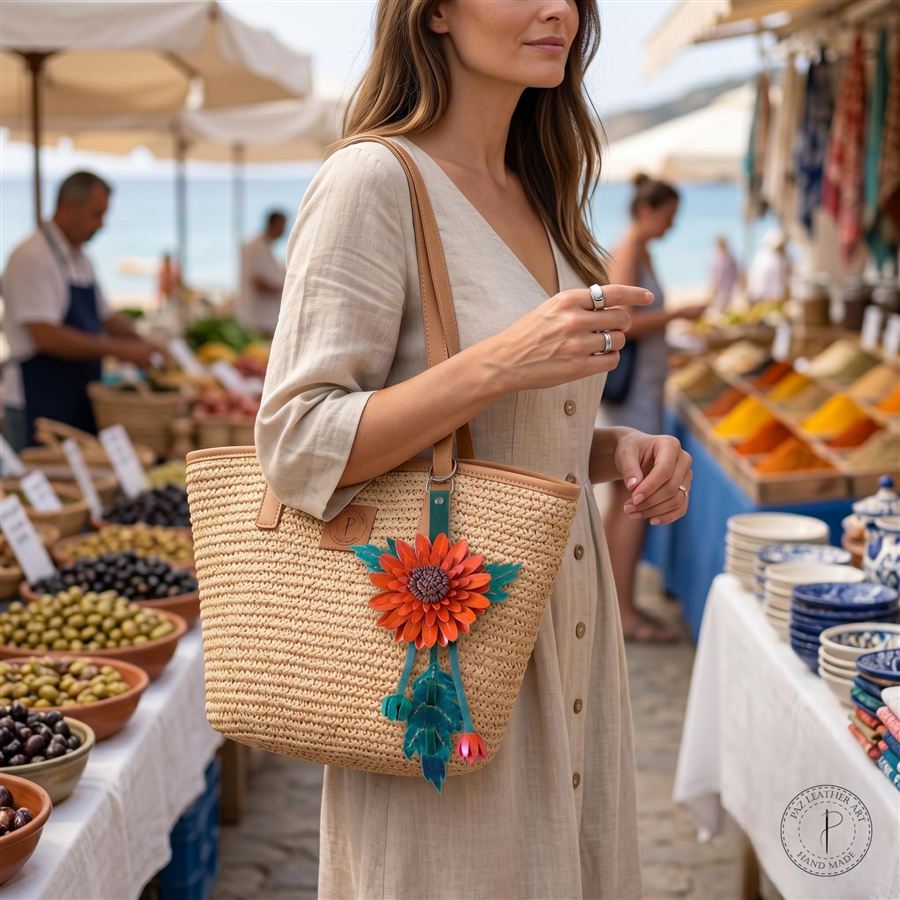 One of a kind
Sculpted leather flowers — daisies and blooms that make a bag unmistakably yours.
See the pieces →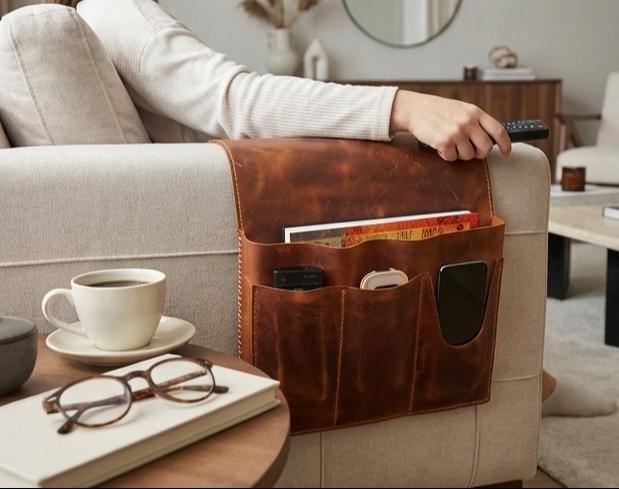 Wireless charging
An original Paz design: armrest caddies with a wireless-charging pocket — plus catchall baskets, coasters, tiebacks and jewelry rolls.
See the pieces →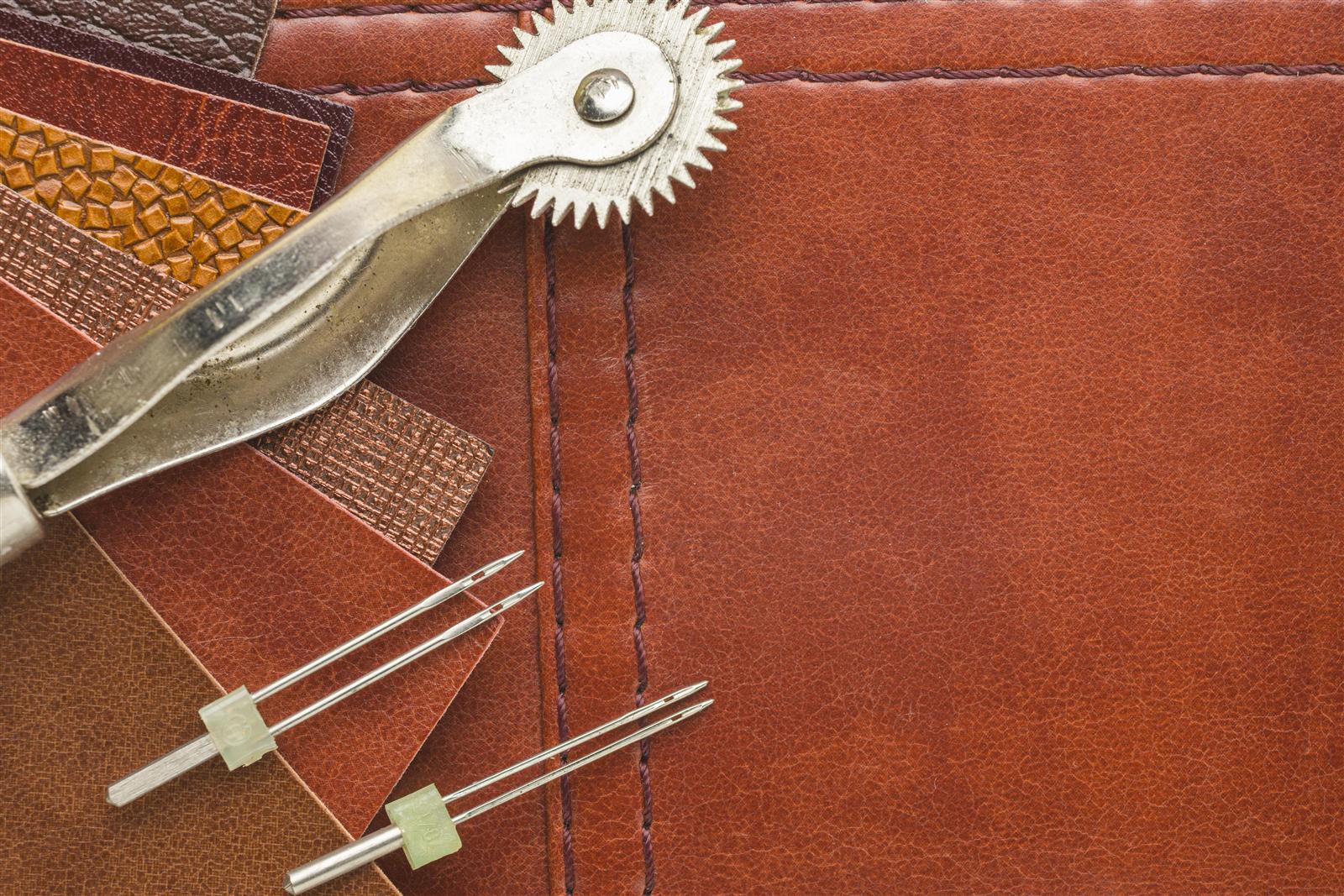
Bring an idea, a sketch, or a problem worth solving in leather. We prototype together, then we build it once — properly.
Start a conversation →The Journal
Field notes from the bench — what leather is, how it ages, and how to look after it. All journal entries →
 Guide
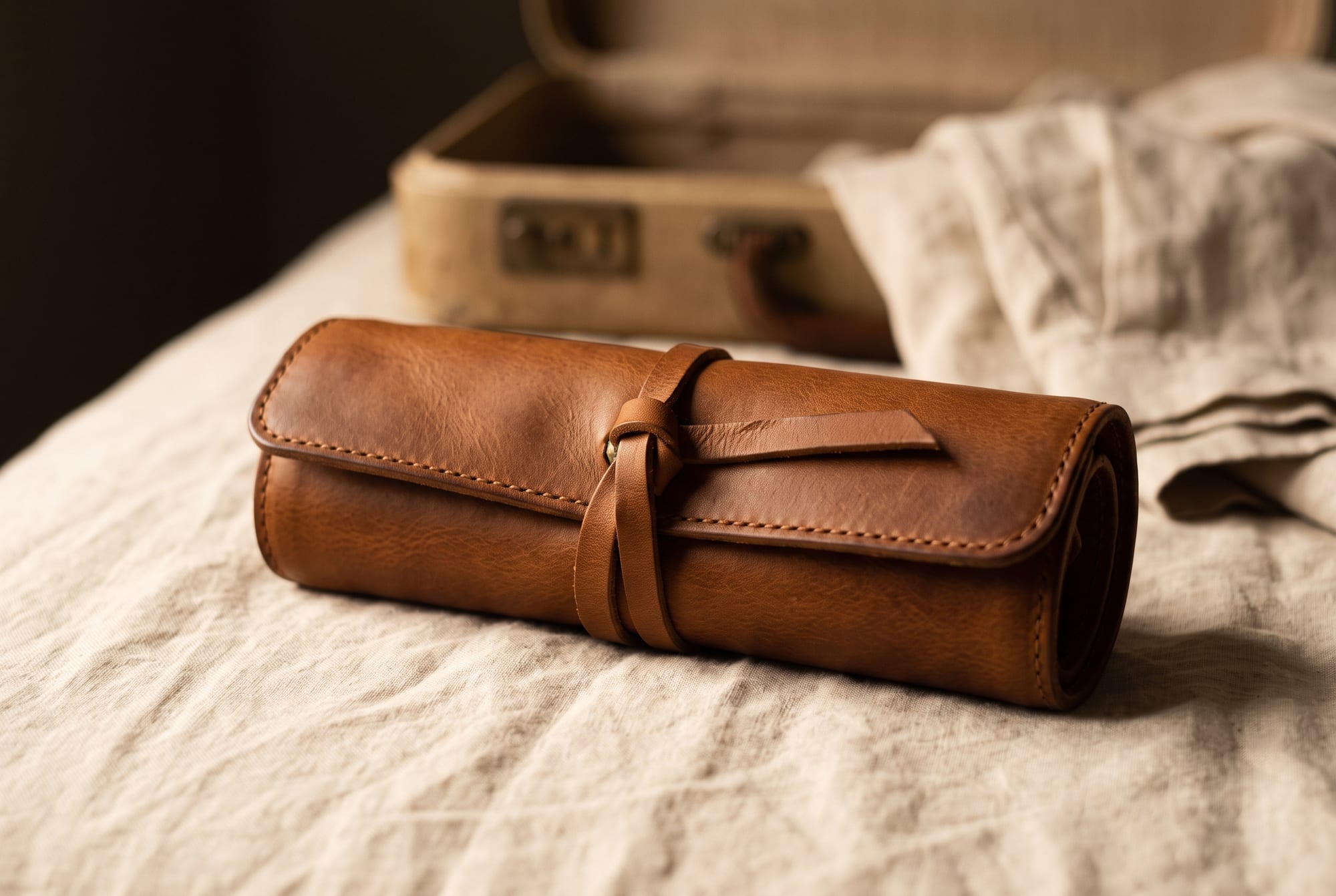
GuideAlmost everyone who buys a jewellery roll thinks they are buying a small, soft jewellery box. They are not. A box and a roll solve different problems — and once you know which problem the roll solves, both choosing one and packing it stop being guesswork.
 Guide
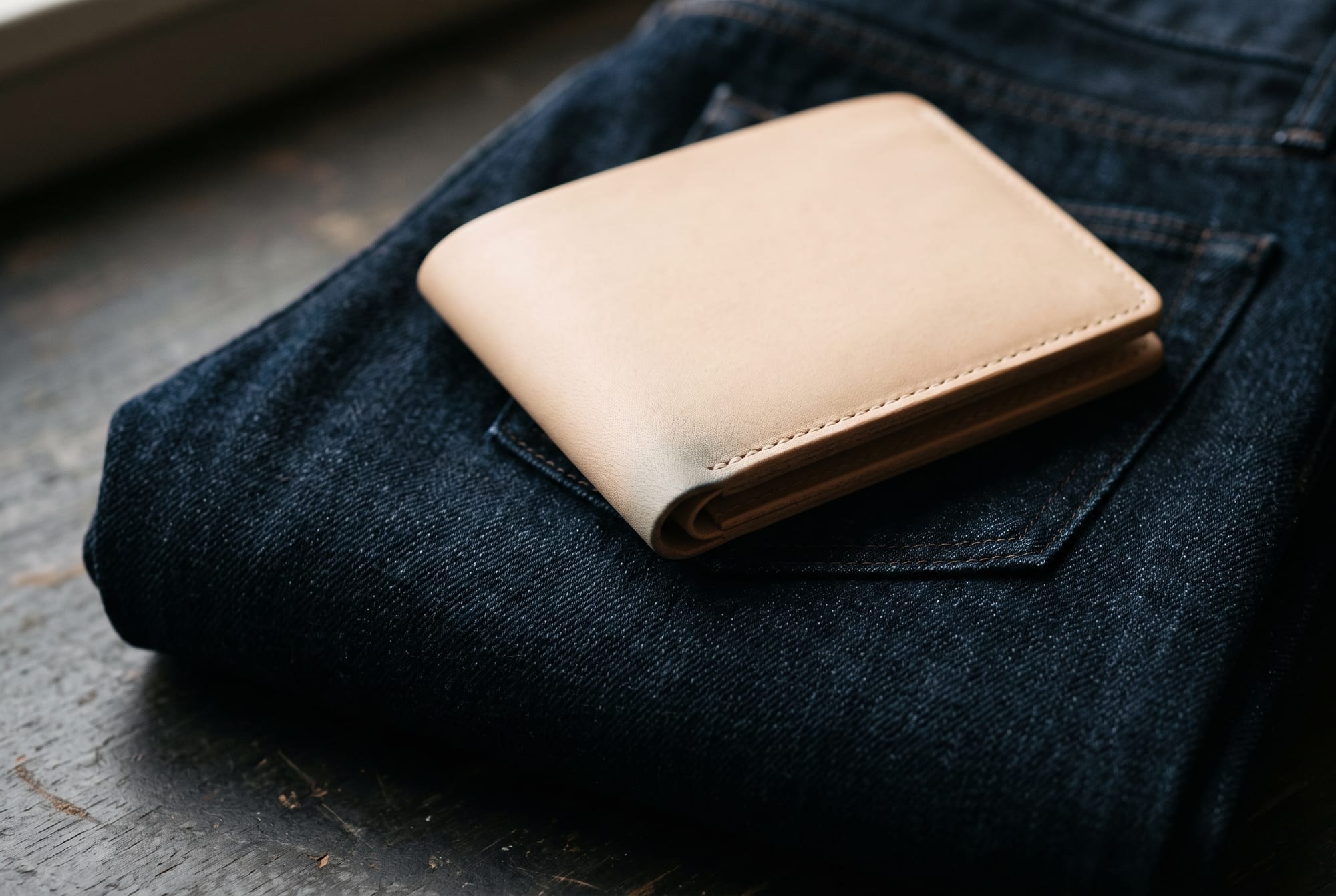
GuideThey look like two separate complaints and nobody treats them as one subject. A new red wallet leaves pink on a cream coat; a pale natural tote comes back from a weekend with a blue-grey cast. Same physics, opposite direction — and only one of the two can be put right.
 Guide
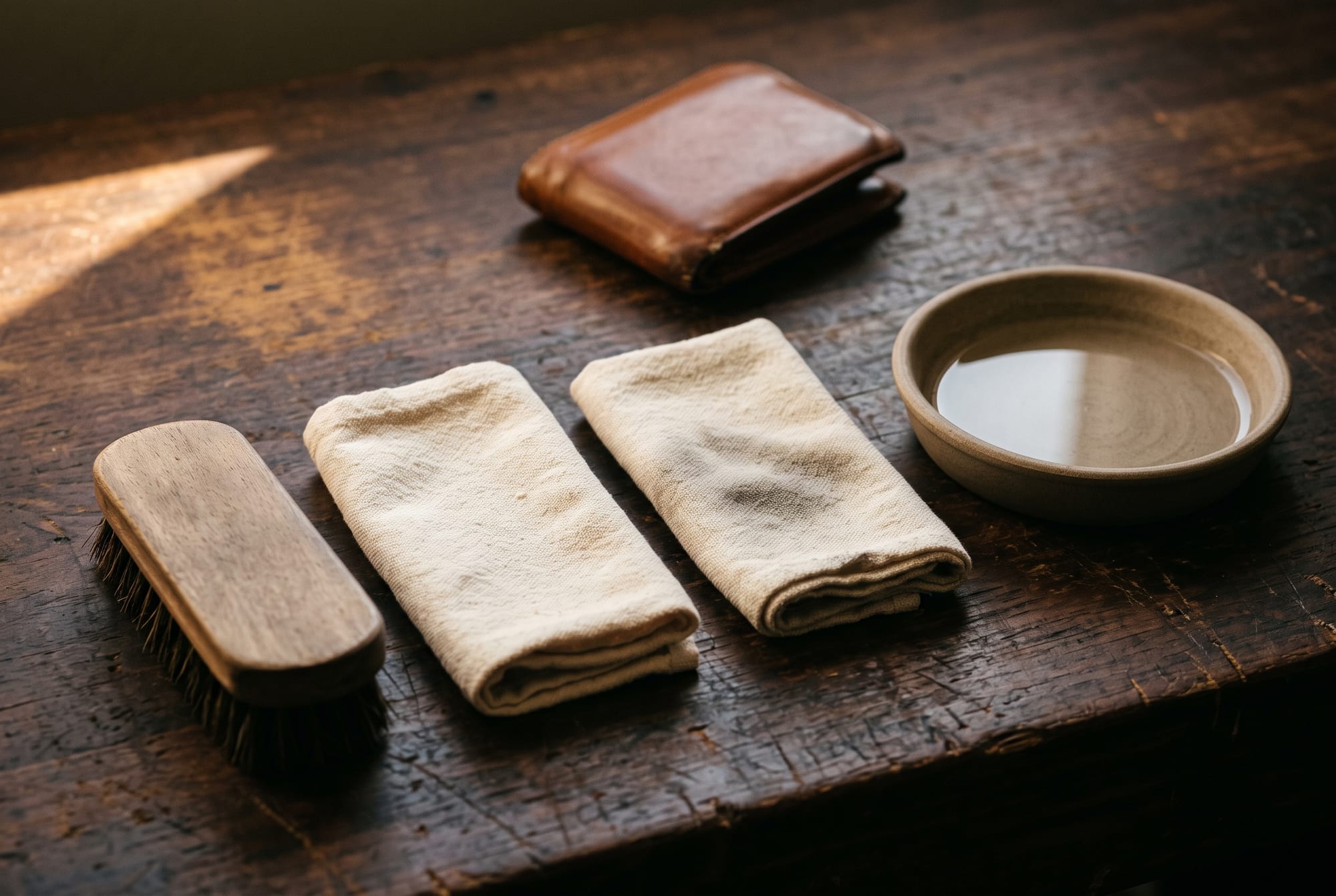
GuideWe have written a guide to conditioning, a guide to stains, a guide to storage and a guide to what not to put on a hide. We have never written one about cleaning — and that turns out to be the gap that causes the most quiet damage.
 Guide
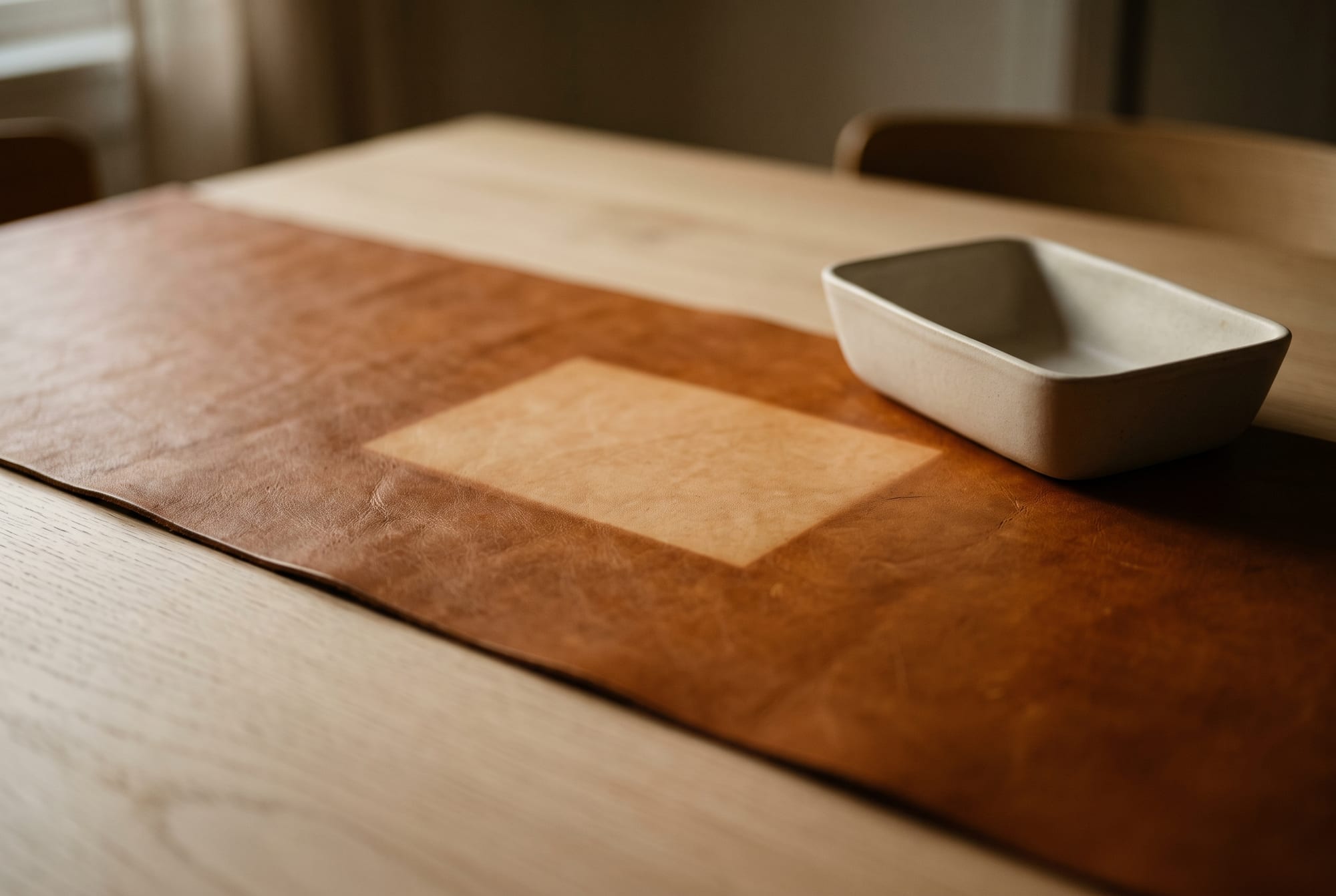
GuideMost care advice says the same three words about sunlight — avoid direct sun — and then stops, which is not much use if the piece is a table runner. Light is doing two opposite things to your leather at once.
 Guide
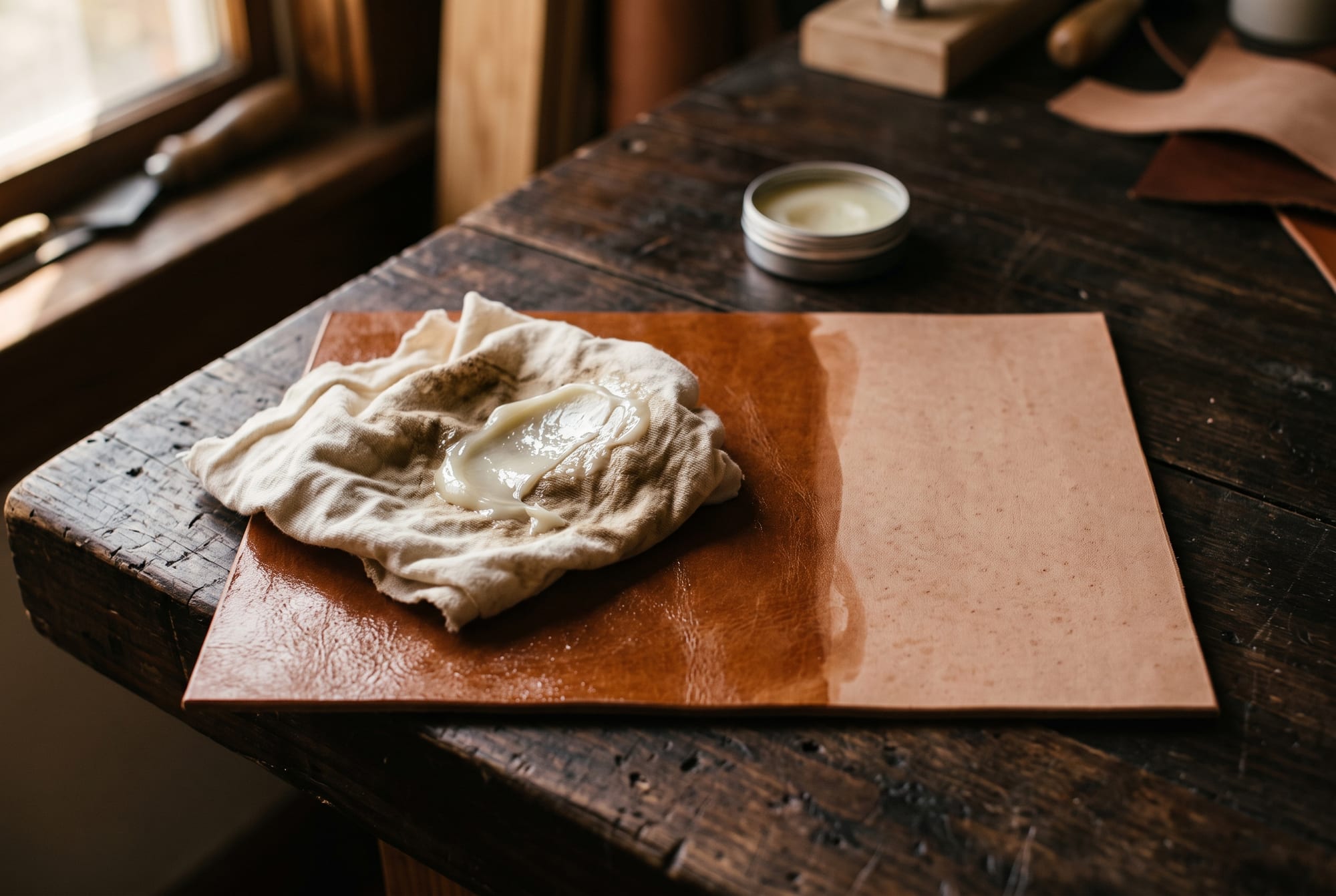
GuideNearly every care guide tells you to condition your leather. Almost none of them tell you what happens if you do it twice as often as that, which is the far commoner mistake and the much harder one to undo.
 Guide
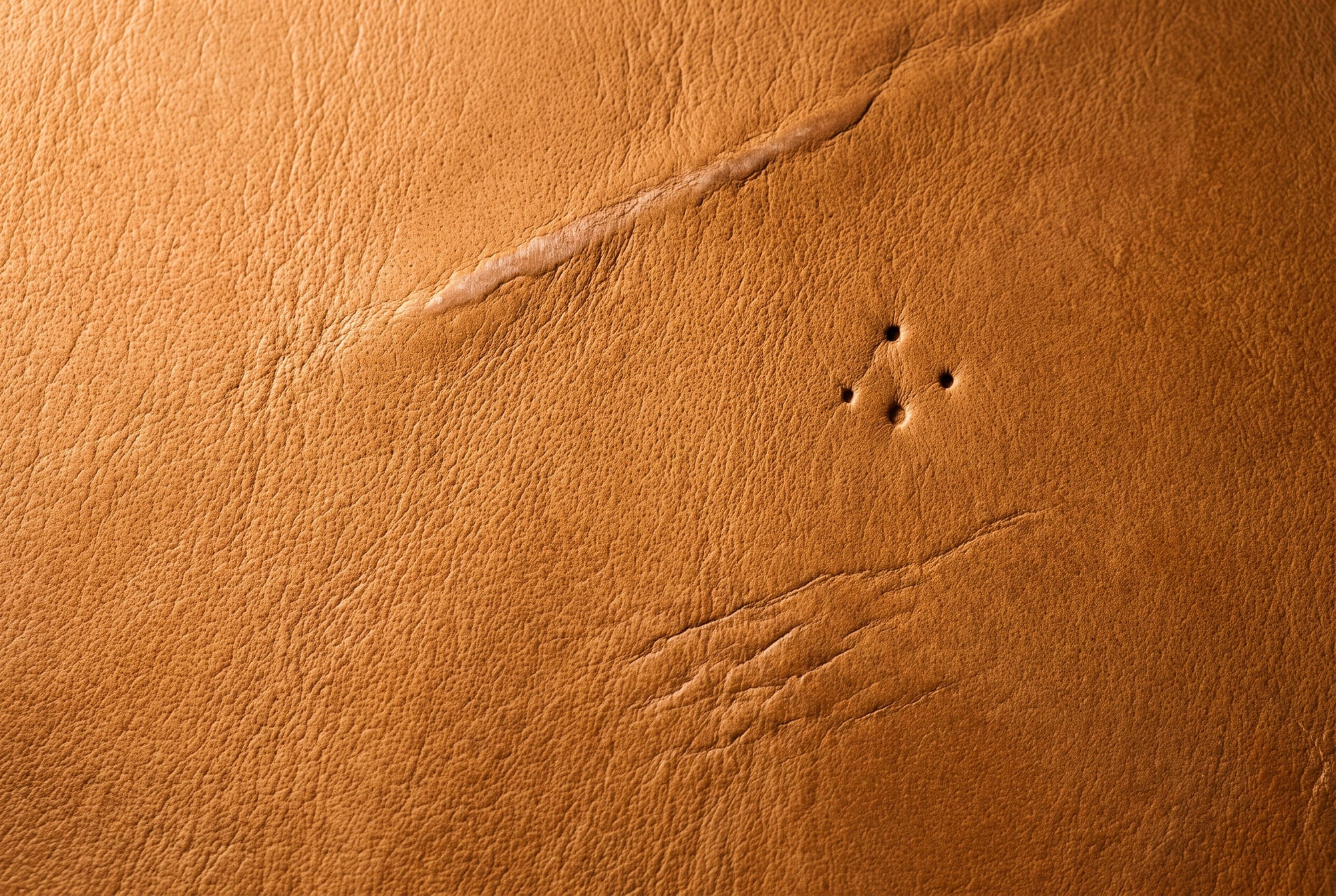
GuideA scar, a fan of wrinkles, a cluster of small pits, a patch half a shade darker. The mark is on your leather because nobody removed it — and removing it is the only step in the whole process that would have made the hide measurably weaker.
 Guide
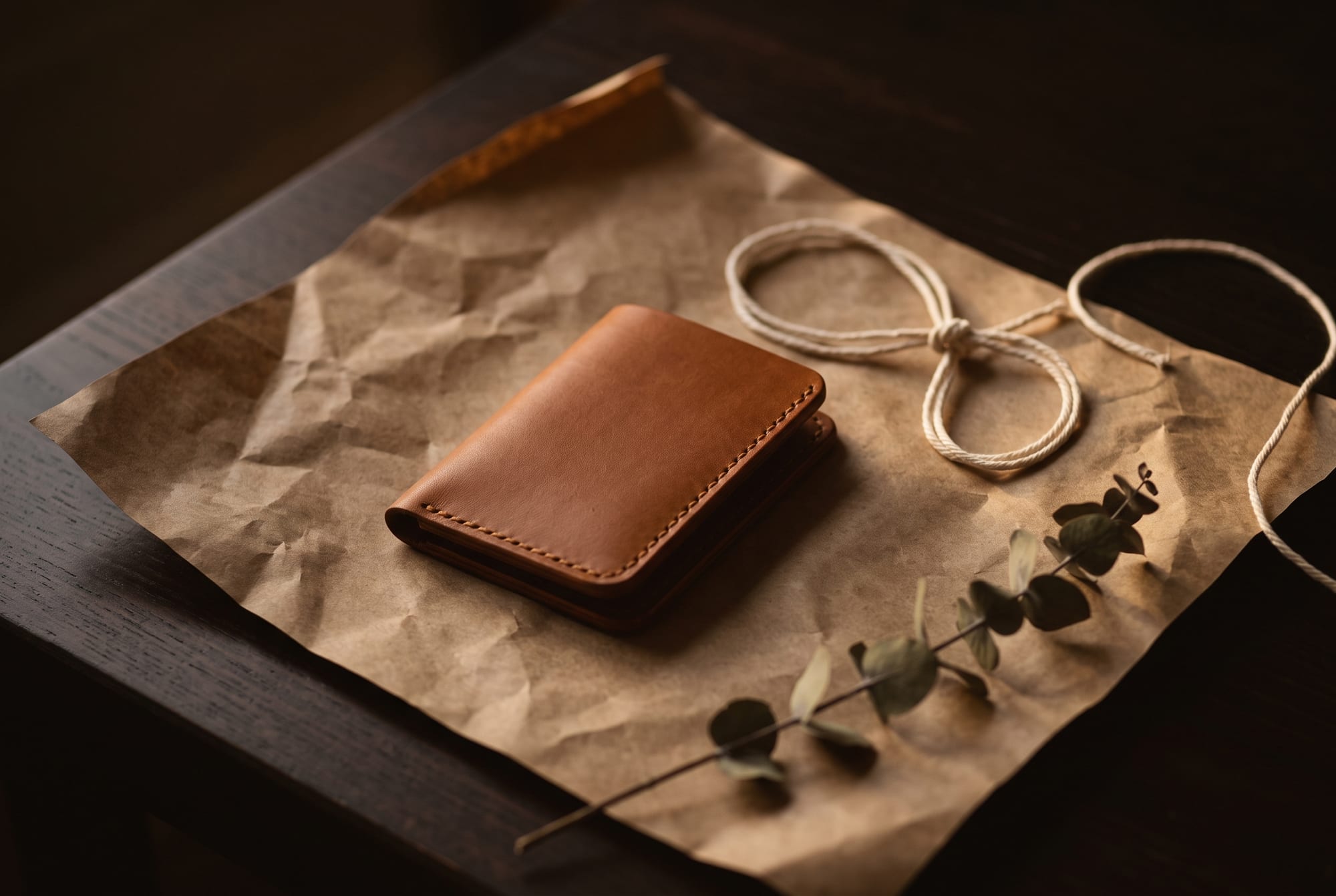
GuideAlmost every leather gift guide is a list of objects. That is the least useful part. Leather has exactly two ways to go wrong when somebody else chooses it — and once you can see them, the list writes itself.
 Guide
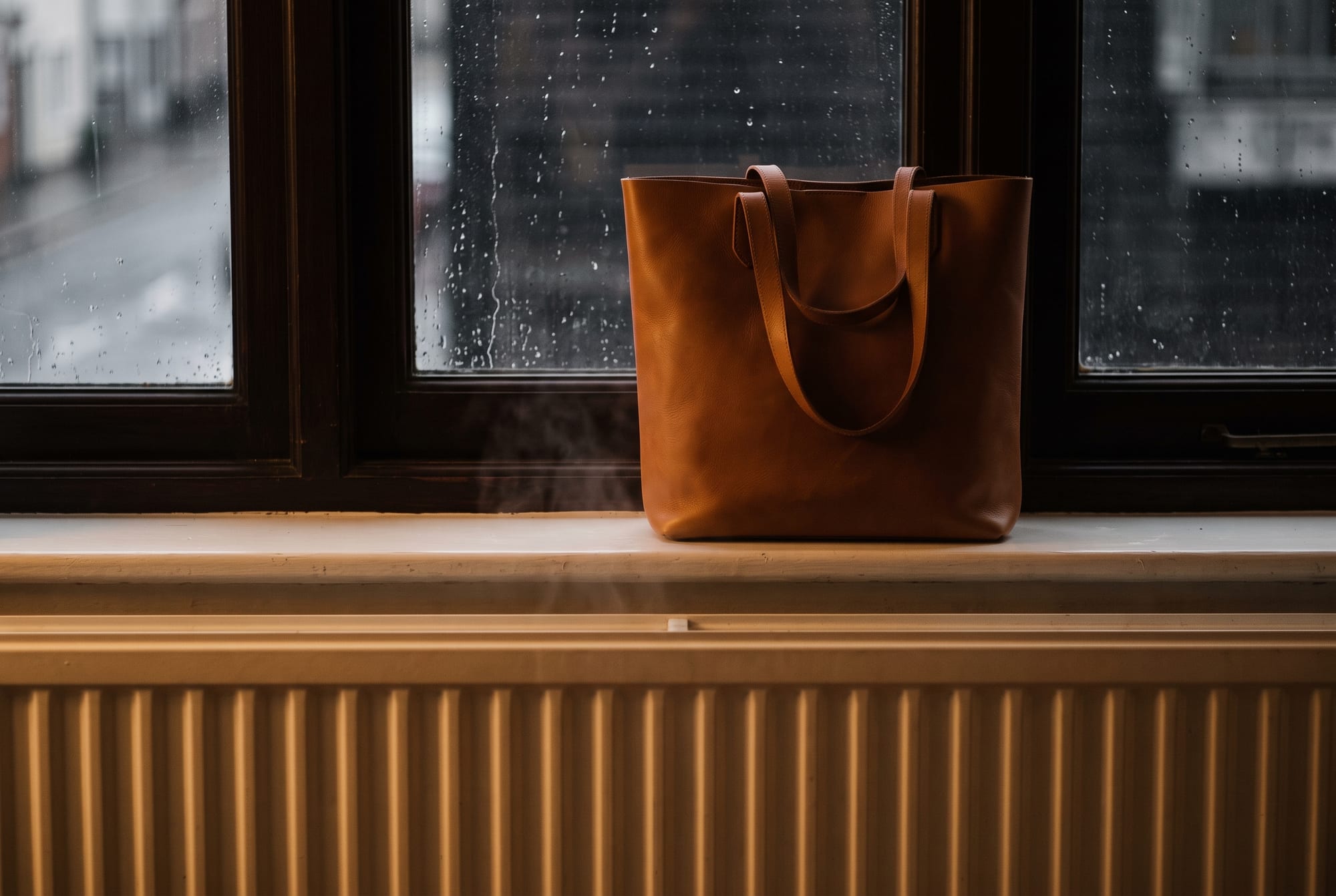
GuideEvery autumn we are asked how to protect a bag from the rain. It is the wrong question. Rain is survivable and we have written about it three times. The piece that comes back to the bench cracked in March was never rained on — it spent four months in a heated room at twenty per cent humidity.
 Guide
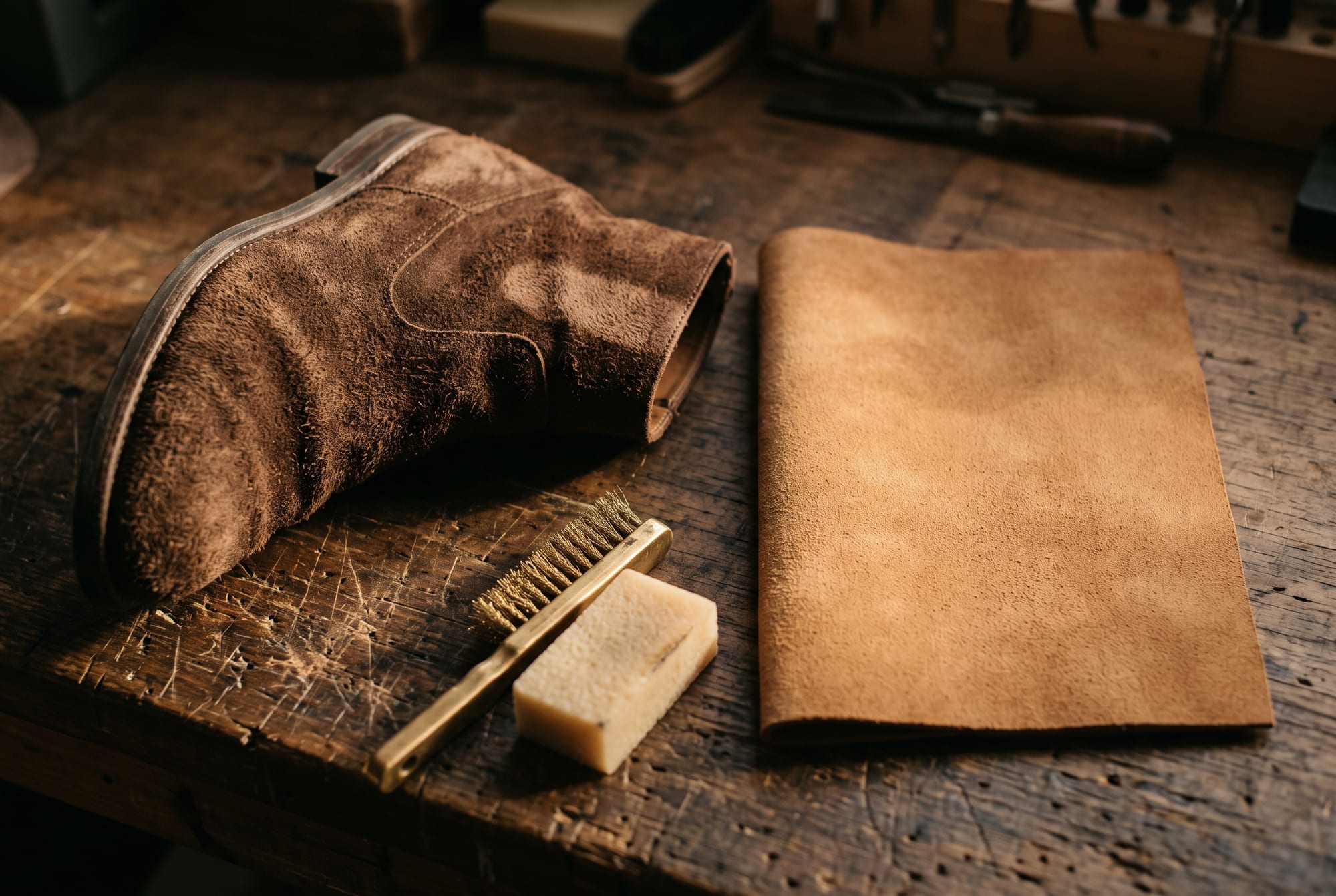
GuideAlmost every article on this site tells you to feed your leather. Put the same balm on suede and you will wreck it in an afternoon — not because nap is fragile, but because of one structural fact: in suede, the fibres are the finish. Change that one thing and every rule downstream runs backwards.
 Guide
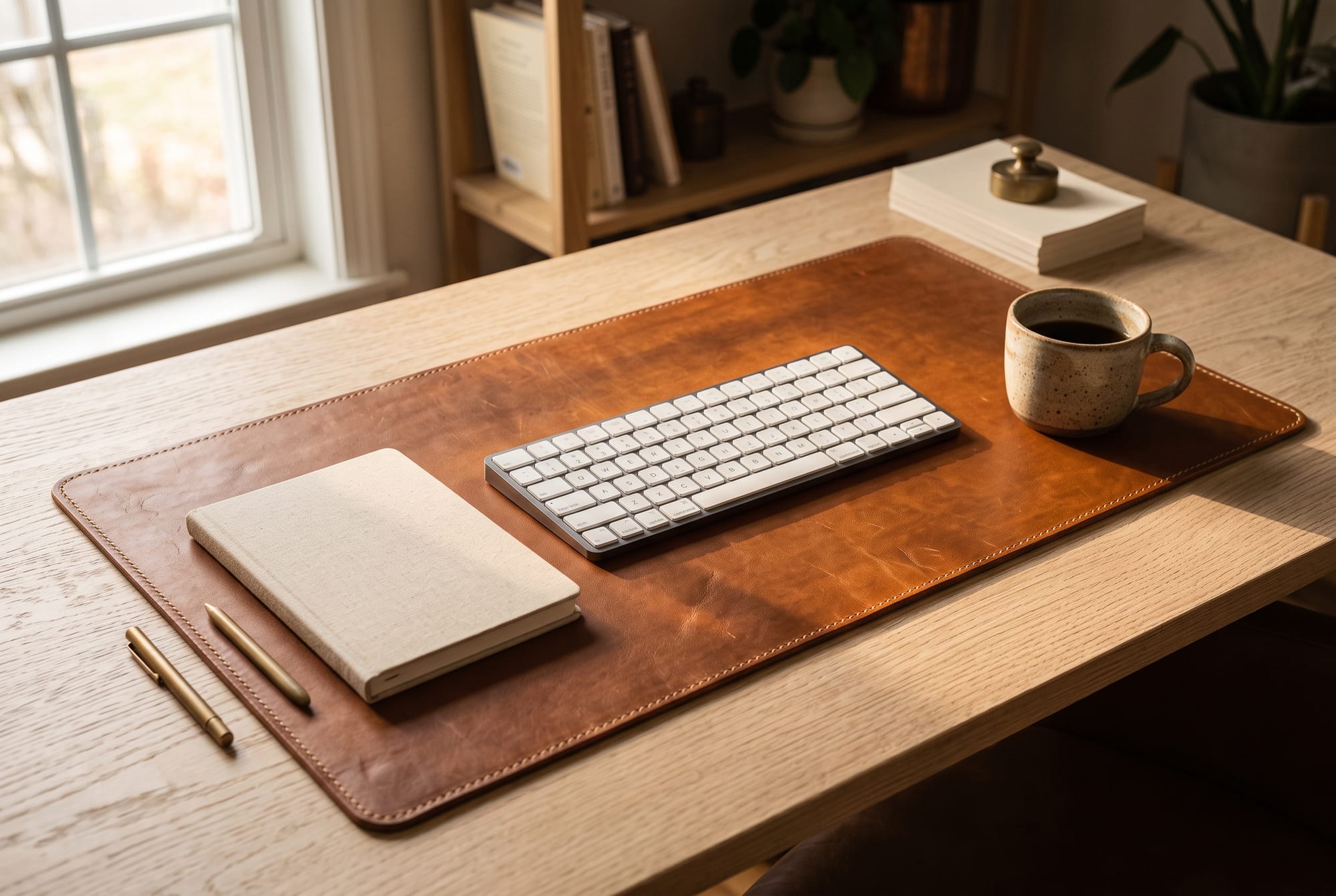
GuideThe desk is the last surface in most homes that nobody designed. The table got a runner, the sofa got a throw, the floor got a rug — and then there is a rectangle of laminate with a laptop on it, in the corner of a room that is now also an office. A desk pad is the cheapest piece of interior architecture you can buy. It is also the one people most reliably buy in the wrong size.
 Guide
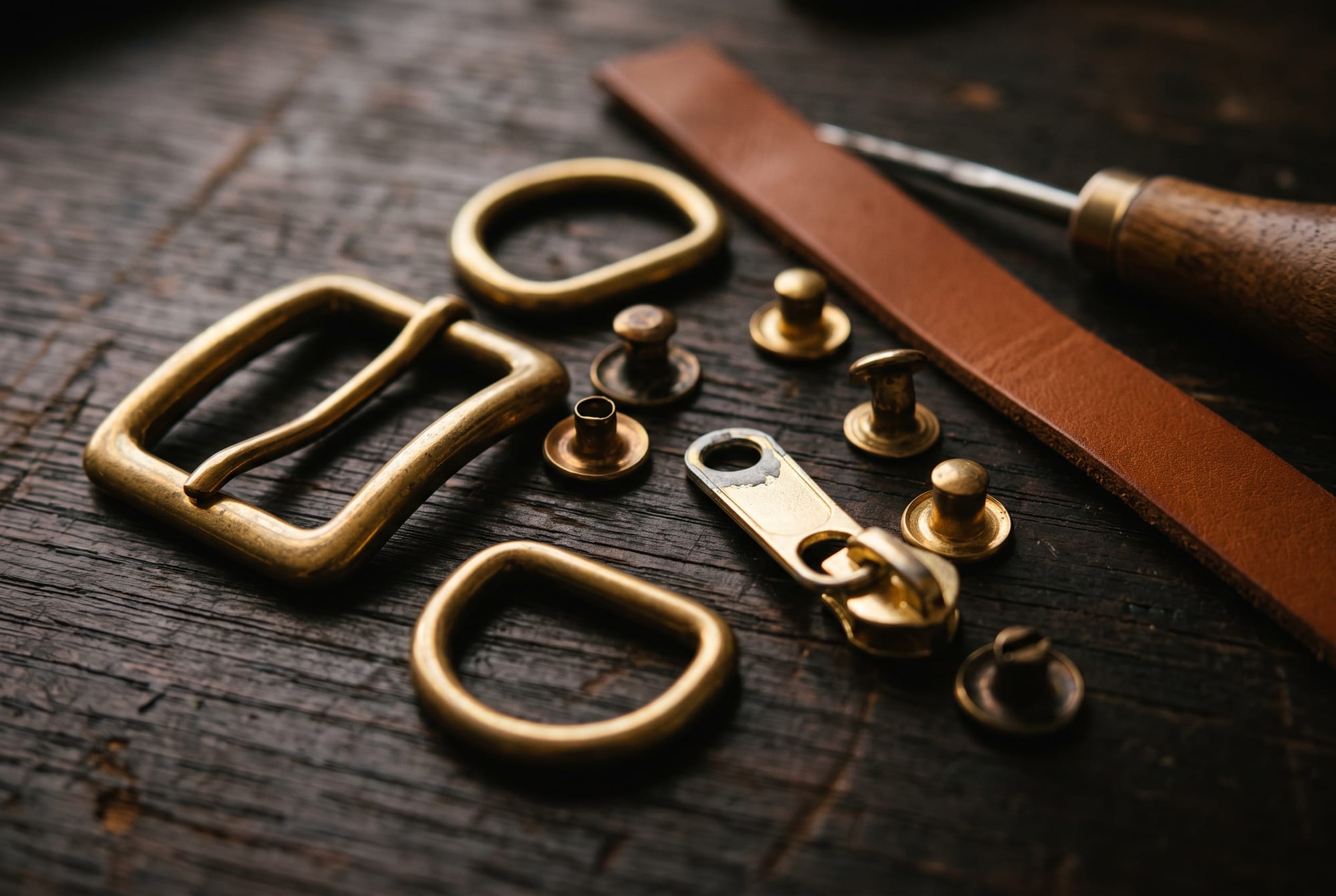
GuideAsk anyone why they stopped carrying a bag they loved and you will almost never hear "the leather wore out". You will hear that the zip stopped catching, or that the gold came off the buckle and left something grey underneath. The hide was fine. It is nearly always fine. Something cheaper gave up first.
 Guide
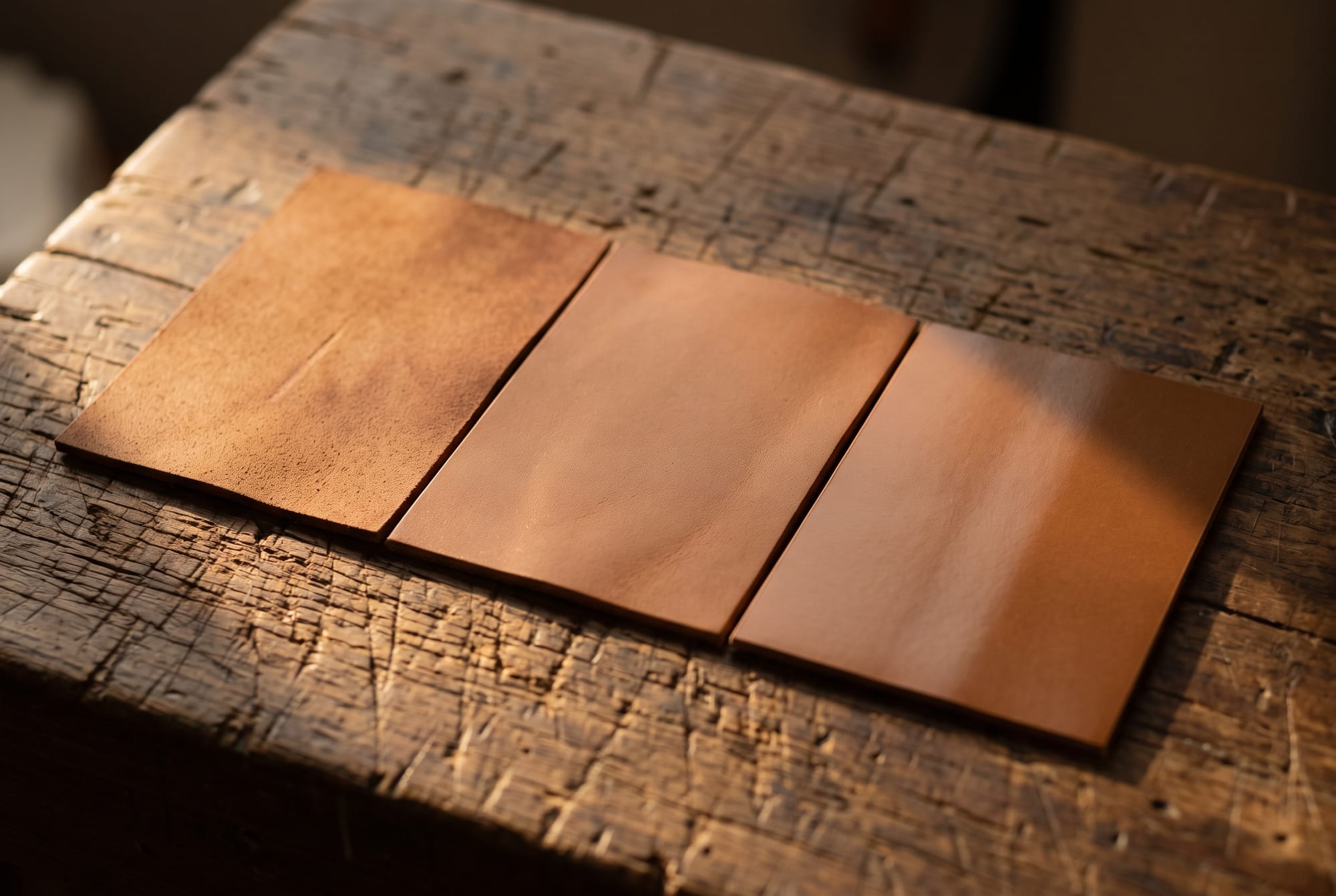
GuideTwo hides can both be full-grain. Both vegetable-tanned. Both cut from the same part of the same animal. One will darken in your hands over ten years and the other will look exactly as it does today until the day it cracks. The difference is the finish — and it is the one line a listing almost never prints.
The Craft
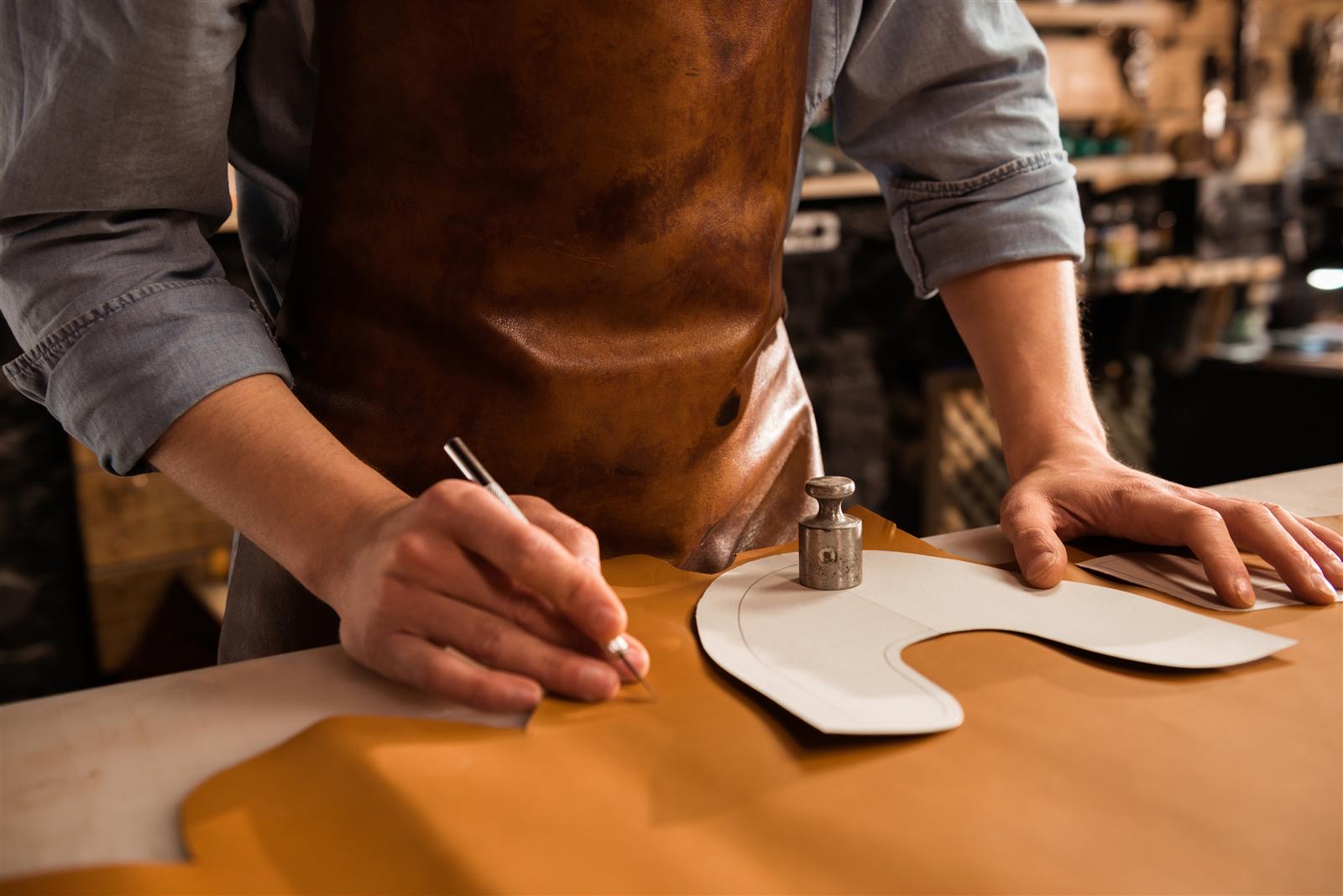
Every panel is clicked from the strongest part of the hide — around scars, never through them. The knife follows the grain, not the clock.
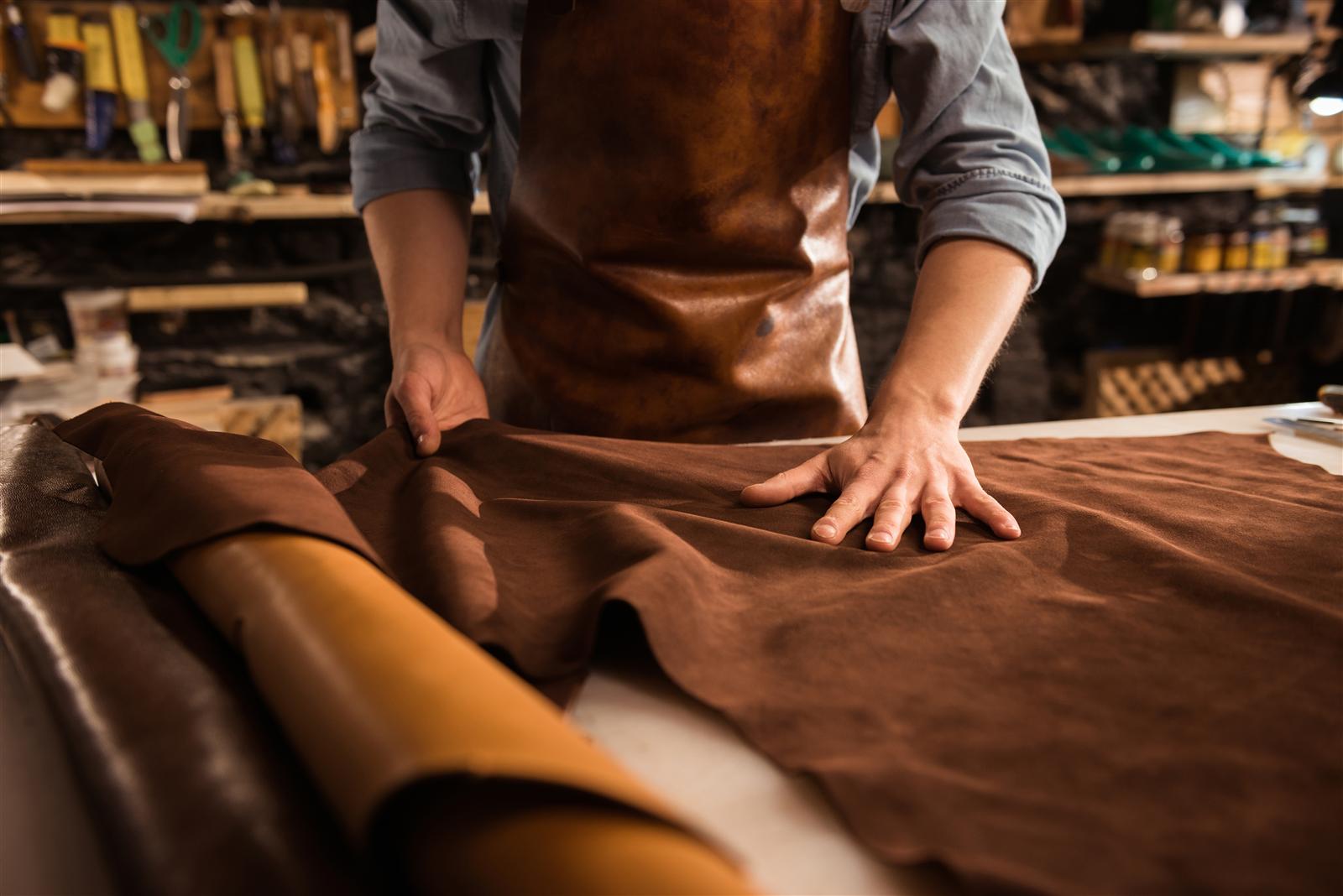
Edges are skived, folds are hammered flat, holes are pricked one by one with a stitching iron. The shape is earned, not pressed.
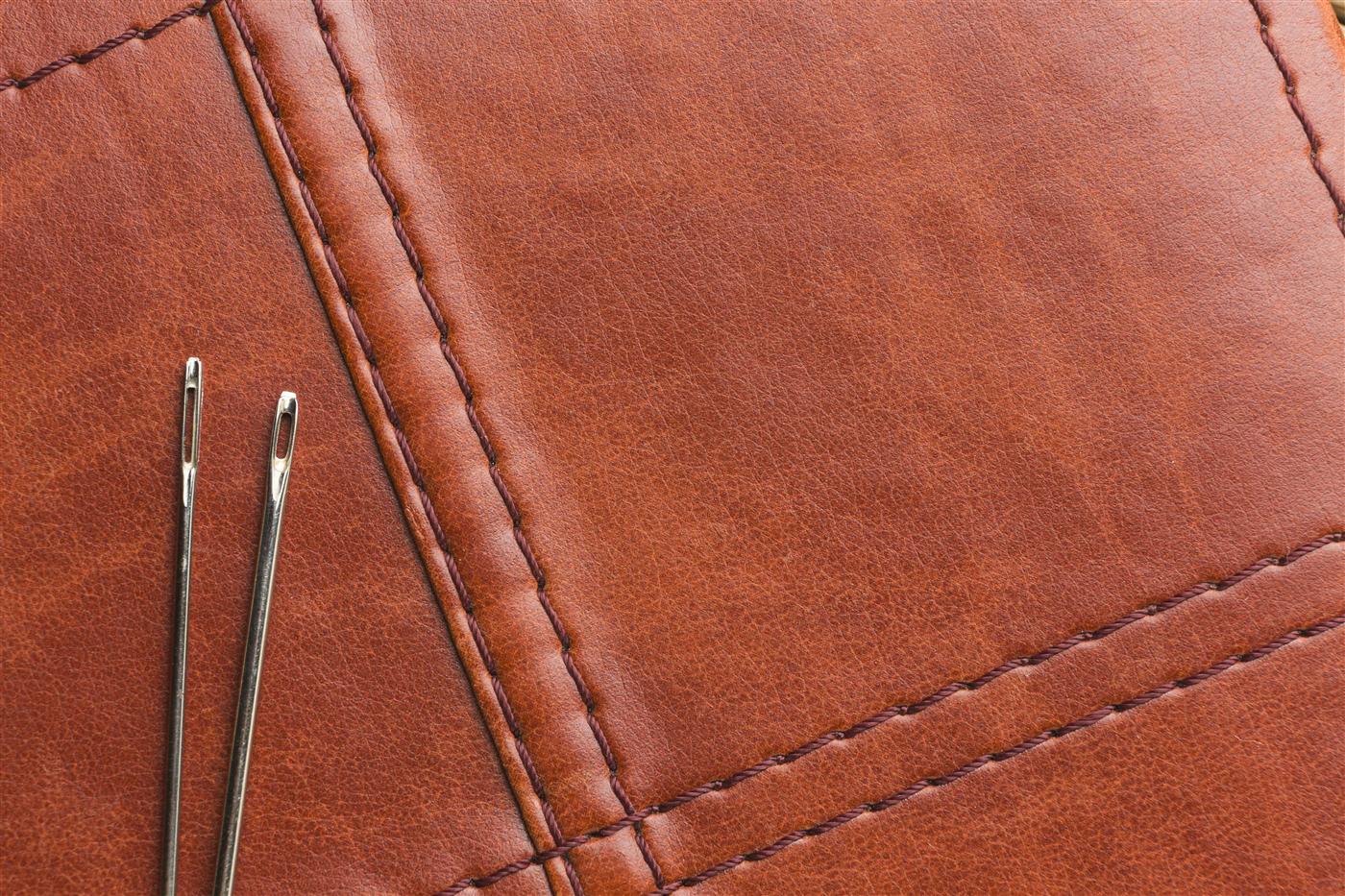
Two needles, one waxed thread, crossing inside every hole. A saddle stitch cannot unravel — cut one loop and the seam still holds.
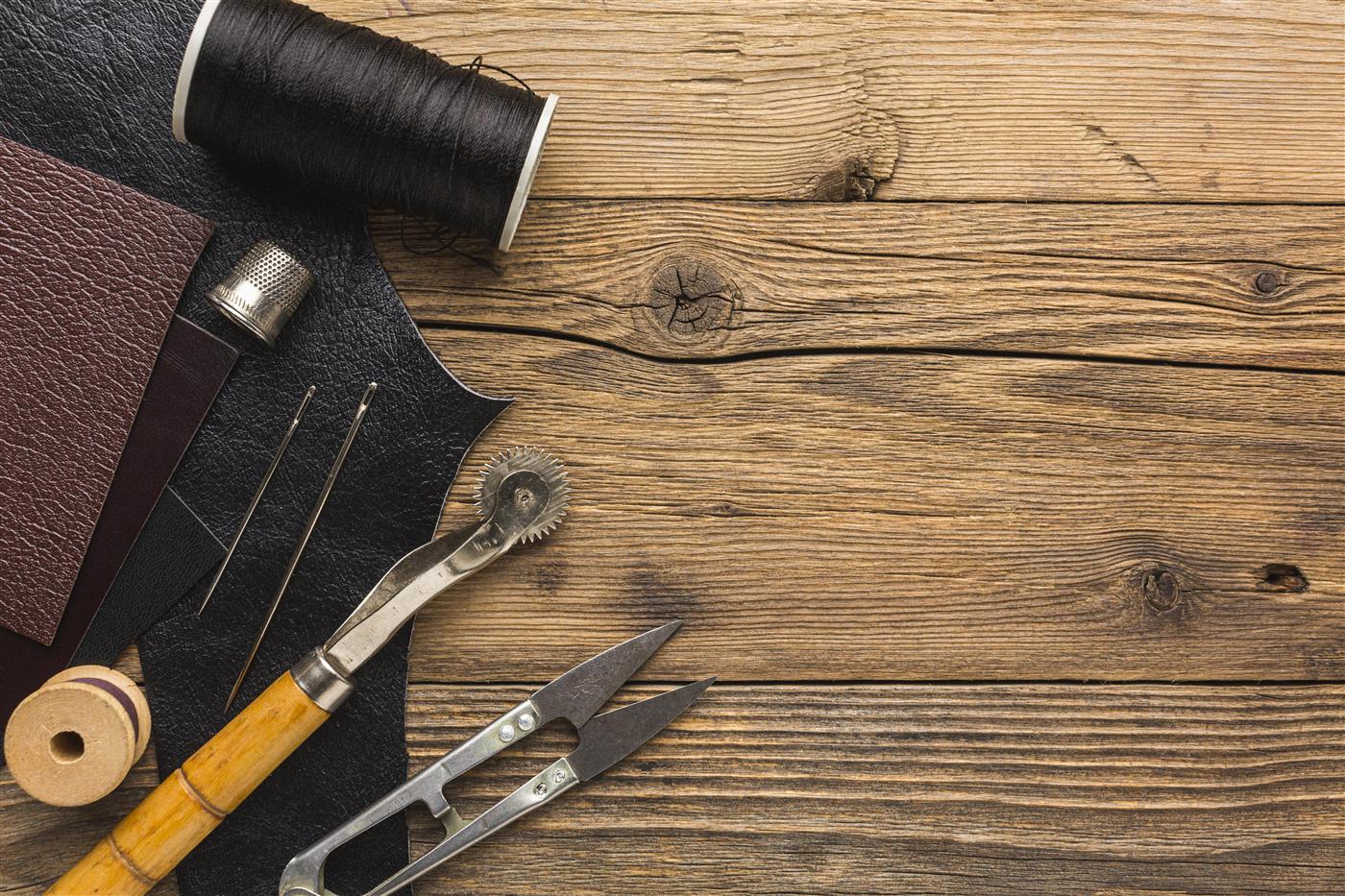
Edges are sanded, dyed, waxed and burnished until they shine like glass. Then the piece rests overnight — and gets inspected in morning light.
“Design should be rooted in the practicality, aesthetics, and respect for nature that give meaning to people’s lives.”
— The Paz philosophy
Materials
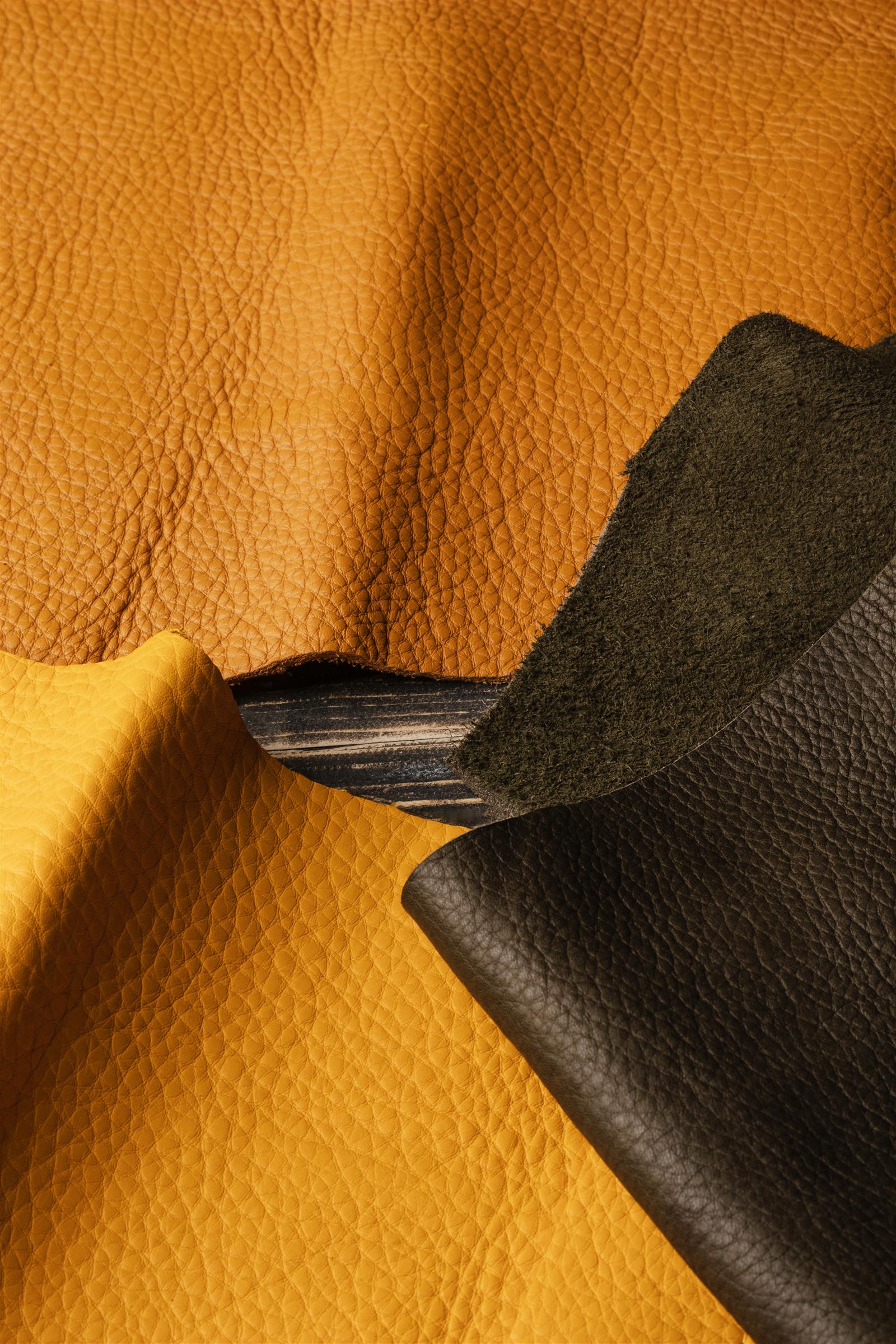
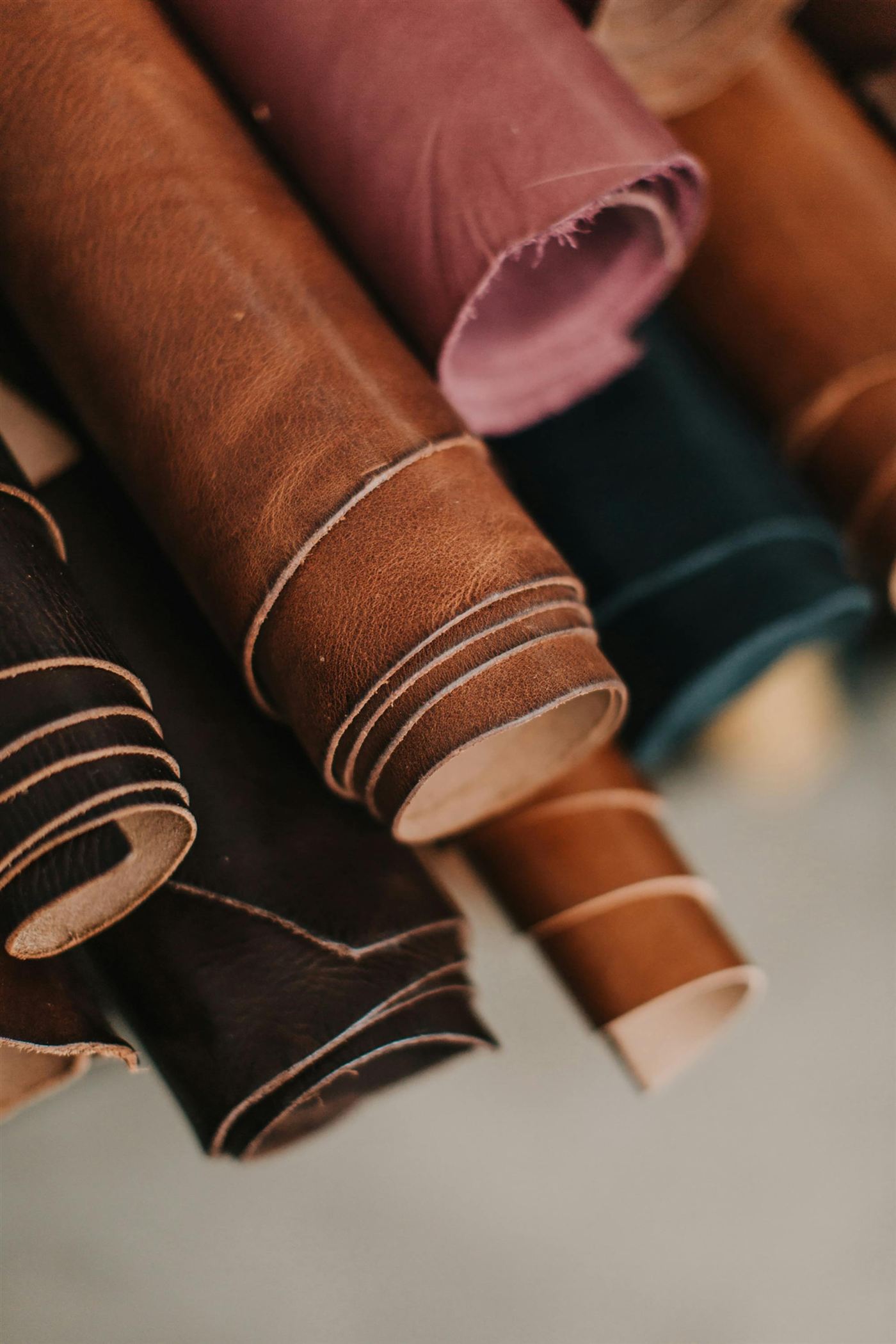
We buy whole hides from slow tanneries — vegetable-tanned, full-grain, nothing corrected or coated. Each hide is graded on the bench: the dense back becomes bags and belts, the supple belly becomes linings and small goods.
The Leather Guide
A short field guide from our bench — what the labels really mean, and how to care for the piece you carry every day.
The intact top layer of the hide, scars included. The strongest cut there is — it develops a deep patina instead of wearing out. Everything at Paz is full-grain.
Lightly sanded to remove marks, then refinished. More uniform, slightly weaker, ages politely instead of beautifully. Common in luxury factory goods.
The layers left over once the good part is gone, glued and coated. Real leather in name only — it cracks where full-grain would only crease.
Vegetable tannage uses tree bark and months of patience; it smells warm and burnishes well. Chrome tannage takes a day and stays plastic-soft forever. We tan slow.
This is the short version. The full Leather Guide goes further: all four grades in one table, what tannage and finish decide, ounce-to-millimetre thickness, which materials survive rain, the twice-a-year care routine and what must never touch leather. Vocabulary lives in the leather glossary — 28 terms explained. Unsure about a stain, a scratch, or an old family piece? Send us a photo — leather advice is free, always.
Everything we know about leather, on one page.
Read the Leather GuideFrom the bench
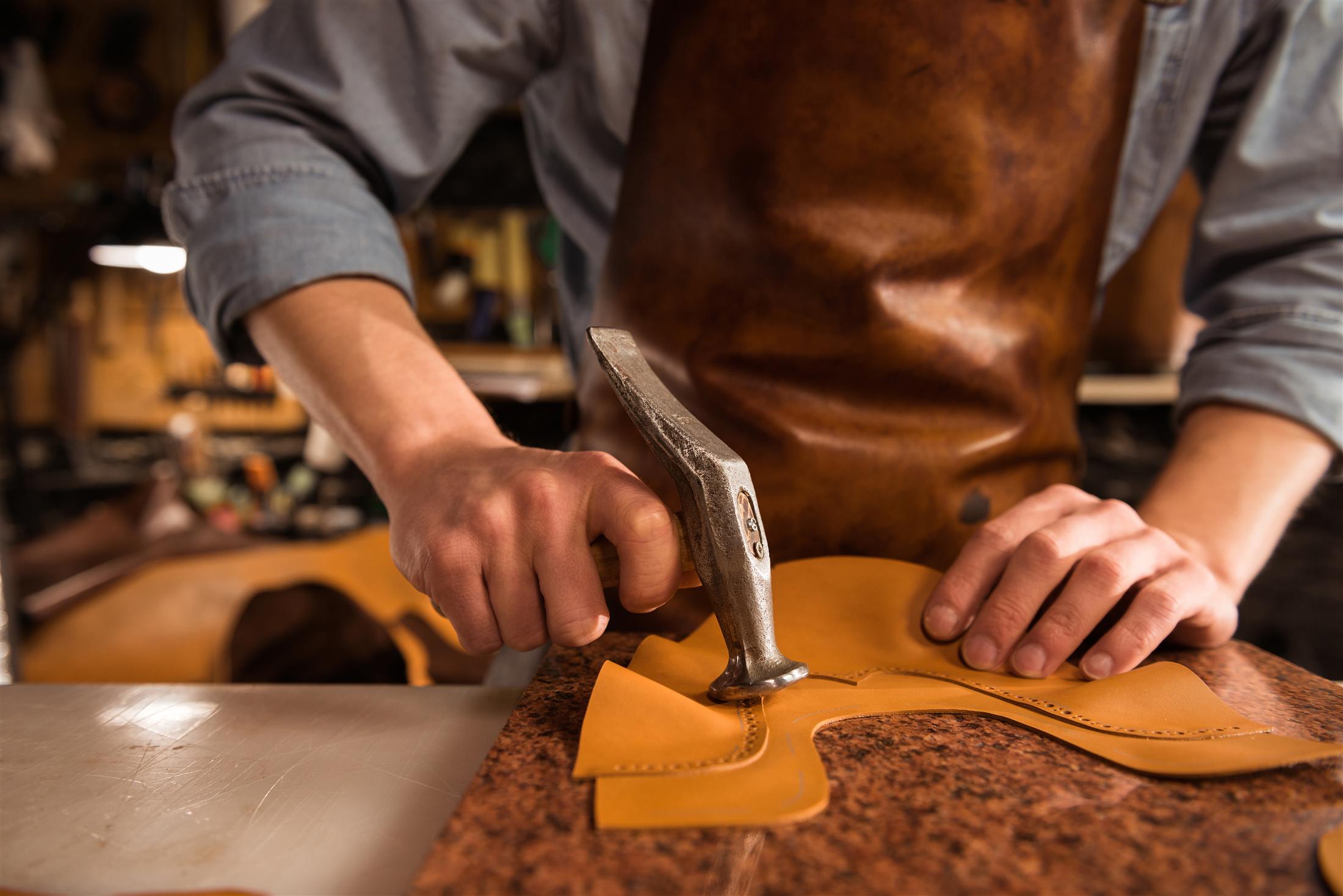
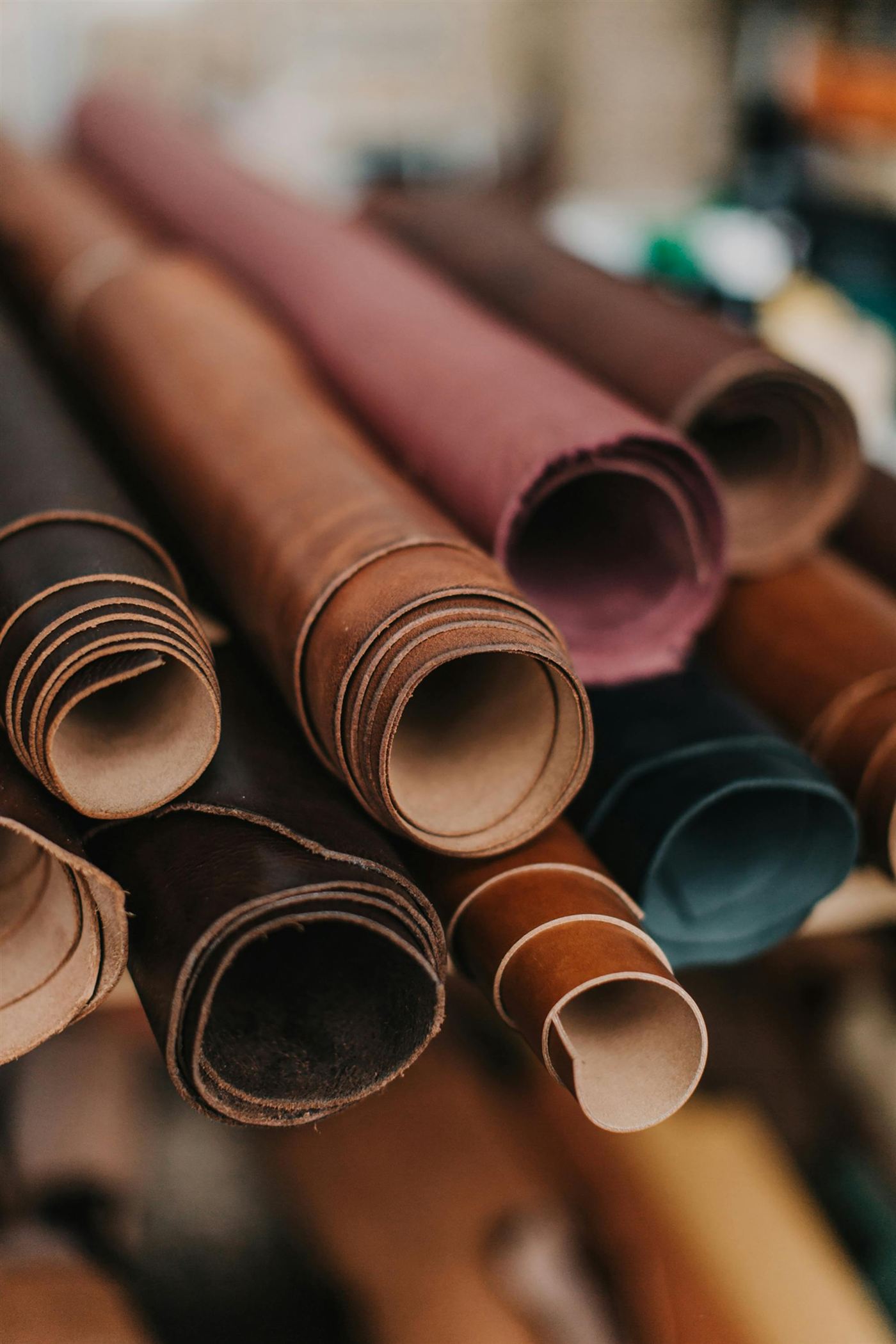
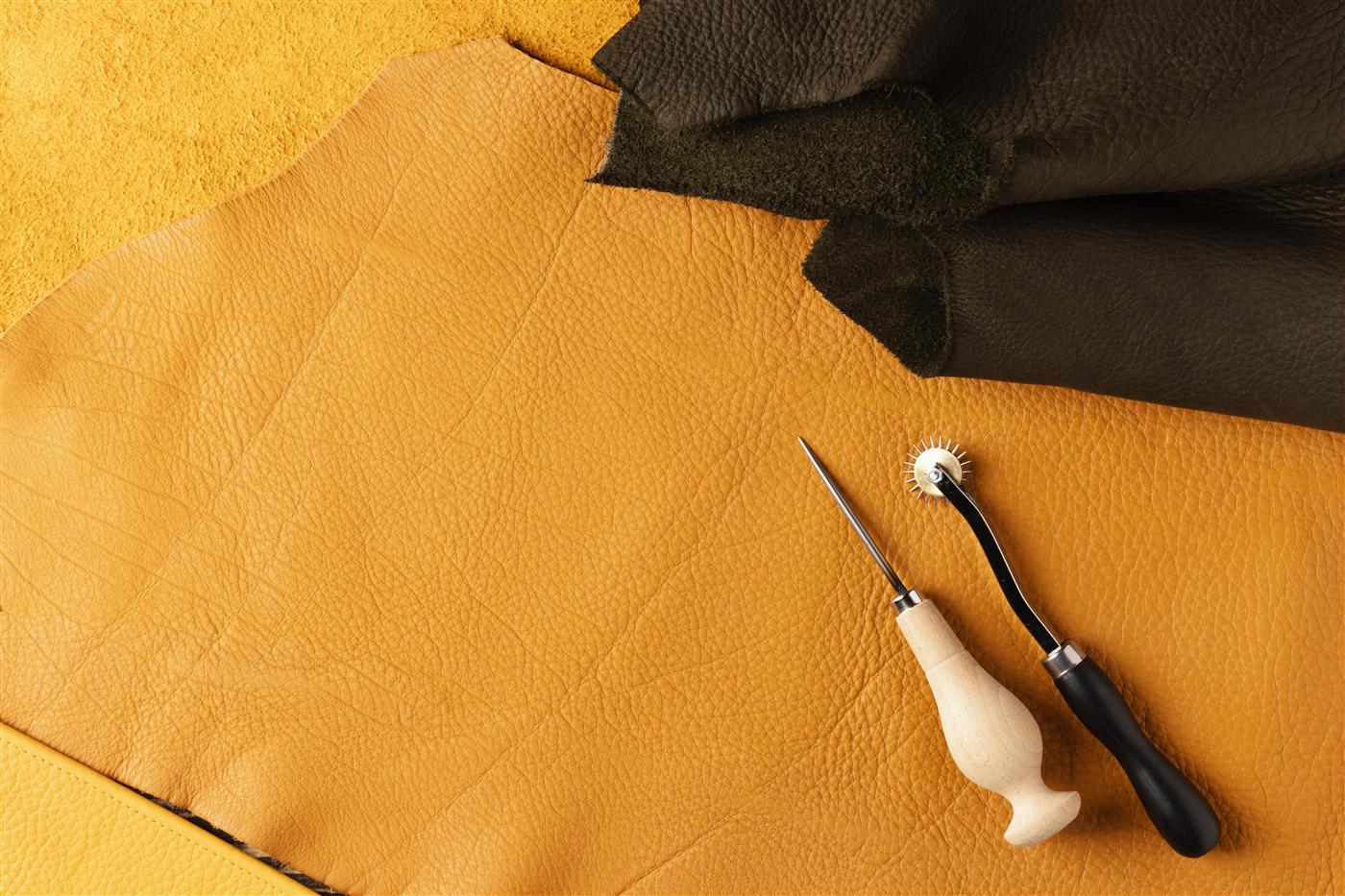
Offcuts, tools, works in progress — the honest mess behind the finished object. More every week on Instagram.
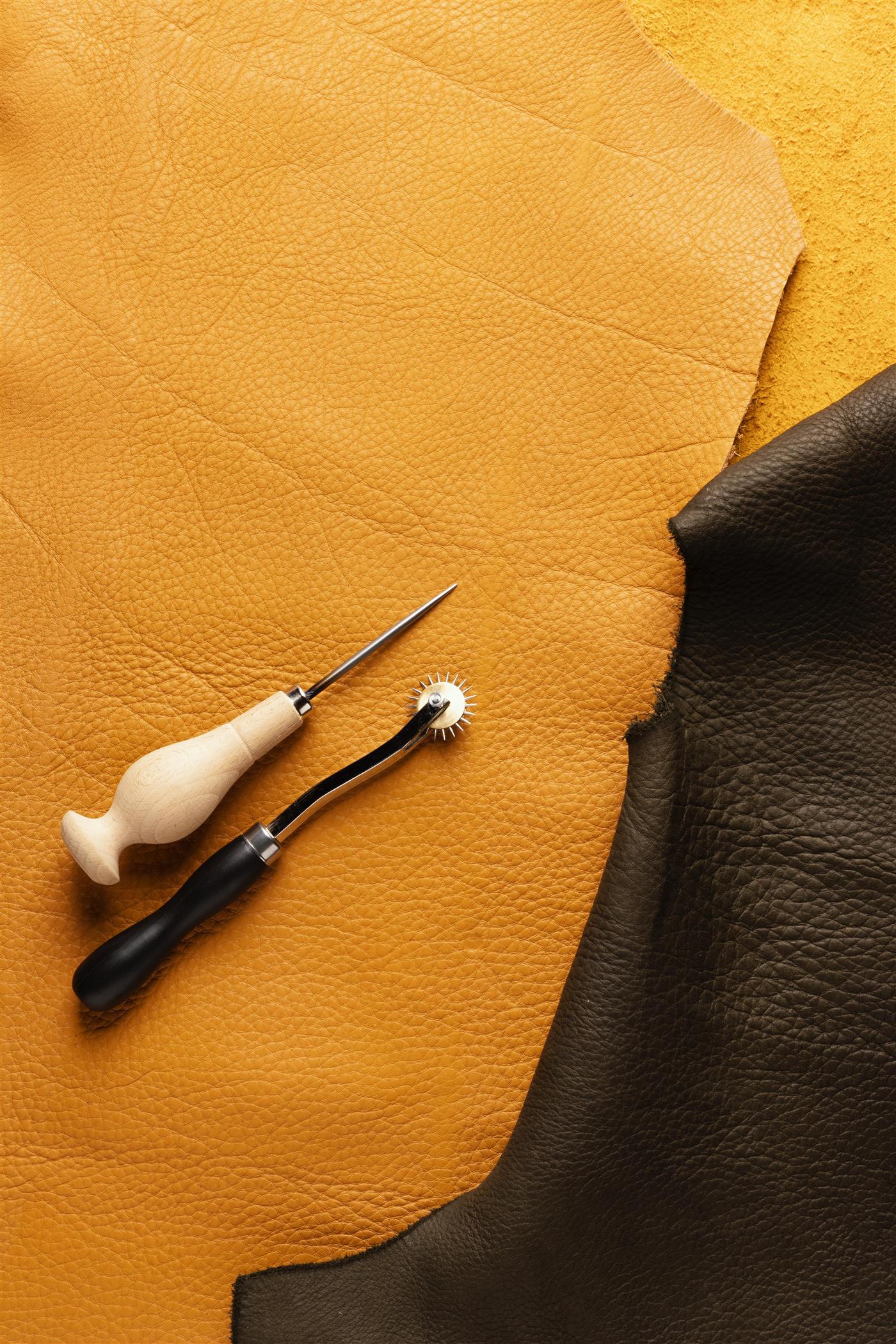
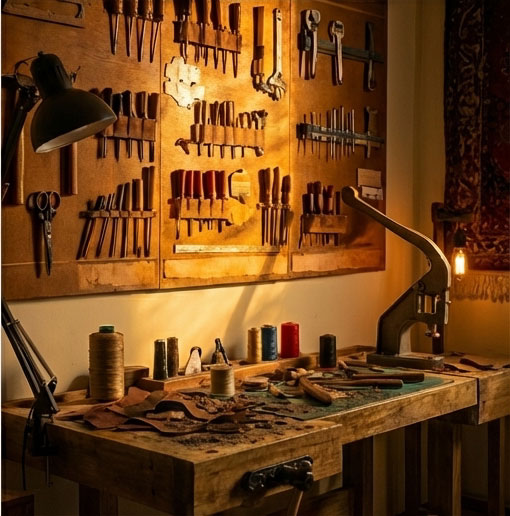
Kind words
Every review our Etsy shop has ever received is five out of five. We’d rather show you their words than ours — alongside the things visitors tell us in person at the atelier, marked shop verified.
The craftsmanship is outstanding; the leather feels premium and has a real soul to it. What truly sets this shop apart is the attention to detail — the packaging was exquisite, and the thoughtful surprise gifts were the cherry on top. It felt like receiving a special present from a friend.
These are really nice leather placemats. Look great on our rustic table. Still need to work on the folds, but they are so cool.
This is so beautiful! My purse that I love has an ugly buckle — I fashioned this gorgeous leather flower to hide it. They also included a couple of other small gifts, which was a great surprise. Would definitely recommend!
This is exactly what people mean by quiet luxury. The tobacco-brown placemats gave our dining table real character. Producing stitching this flawless without a machine takes serious talent.
Watching the saddle stitching up close — every stitch laid by hand, no machine anywhere — was mesmerising. This is a piece I’ll carry for years.
A perfect meeting of modern technology and traditional handwork. No pointless buckles or straps — just smooth leather and clever design.
The photos didn’t capture just how rich and vivid the coloured leather is, or the textural qualities of the material. Zafer messaged throughout, to thank us for purchasing from him. His messages were always warm, genuinely thoughtful, and you get the impression he takes a lot of pride in his work.
The customer service was outstanding, the item was beautiful quality and a wonderful gift. I will definitely order from them again. Highly recommend.
These were so cool. So glad I purchased them. Look great on our nook table.
Everything was perfect. The product and quality were flawless.
I never imagined leather and Turkish needle lace could come together this beautifully. Knowing every detail was shaped by hand makes this runner the most treasured thing in my home.
I was so tired of soulless, mass-produced homeware. This leather runner with its lace detail let my home breathe again. I can’t wait to get back to that sweet atelier in Istanbul.
When I examined this tool roll at the atelier, I couldn’t believe the thickness of the leather and the strength of the stitching. Being hand-sewn the traditional way gives it a wonderful soul.
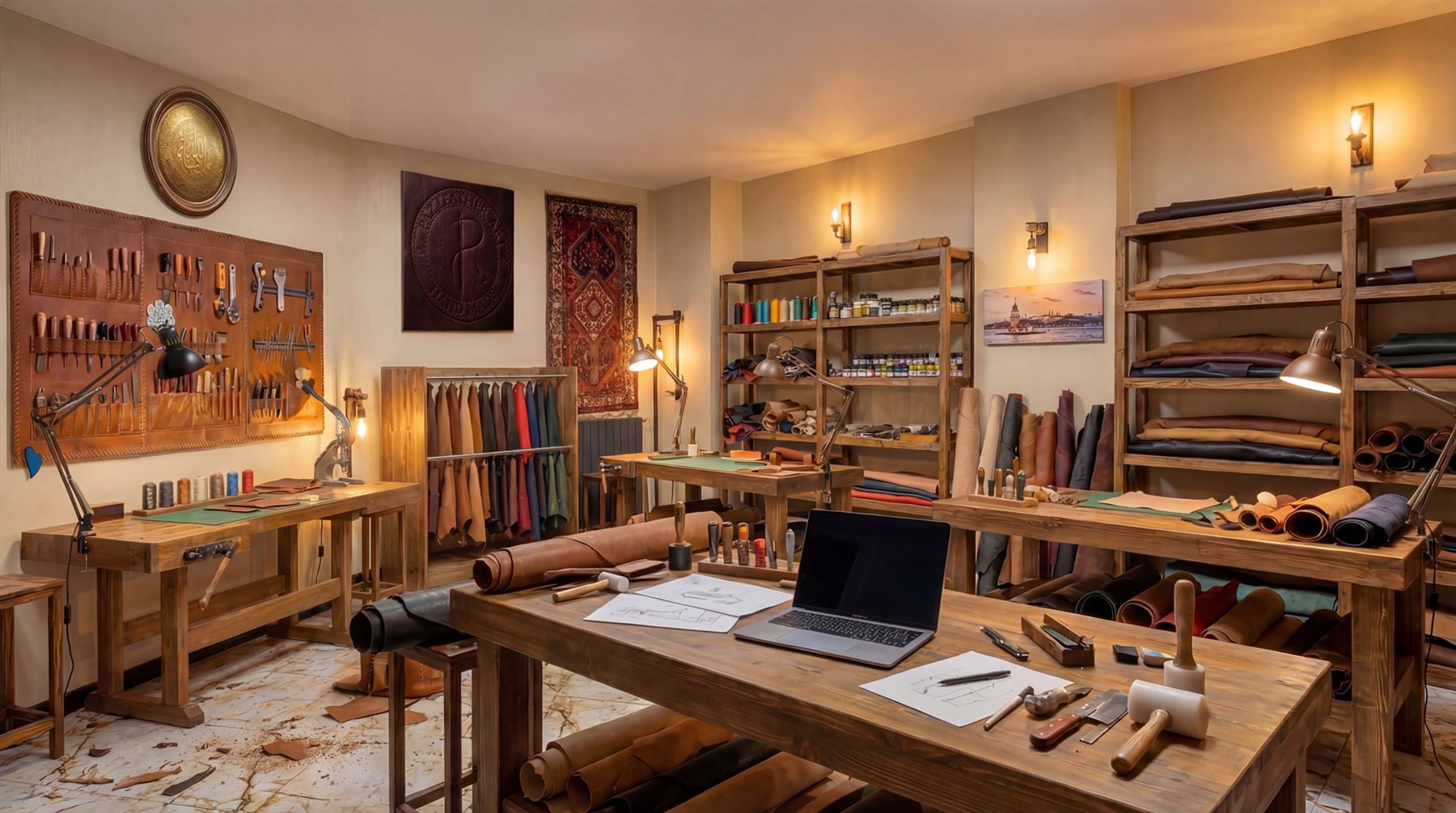
The Atelier
Paz began in a grandfather’s leather atelier — where a boy who would grow up to write software first learned the scent of leather, the oil of waxed thread and the rhythm of hand-stitching. When the atelier was passed down, the craft never stopped: custom orders, small repairs, constant experimentation kept the legacy alive.
Today Paz is two pairs of hands: that programmer, and an interior architect with twenty years of bringing aesthetics into everyday life. Craftsmanship carries the memory of generations; design is the free language that translates it into the present — most visibly in our signature union of leather and lace.
Sustainability
Sustainability isn’t a page on our site — it’s how a two-person atelier naturally works. Here is exactly what that means, in practice.
We buy whole hides and plan every cut on paper first; offcuts become coasters, charms and practice pieces — never landfill. Nothing is produced without an owner in mind, so nothing is overstocked, discounted or destroyed.
Every order ships wrapped in 100% recyclable craft paper, inside a reusable cotton bag bearing the Paz seal — the same bag we recommend for storing your leather. A small handmade surprise rides along, made from the offcuts of your own piece.
Tucked into every order is a periwinkle flower seed (Catharanthus roseus). Plant it, and something grows while your leather ages — our reminder that design should respect the nature it borrows from. Buy an object, plant a flower.
The most sustainable object is the one you never replace. That is why we only build with full-grain leather and a saddle stitch that outlives its maker.
Questions
The essentials are below — the full library of 50 buyer questions with diagrams is here.
Every Paz piece is made by one maker in an Istanbul atelier — drawn, cut and saddle-stitched entirely by hand with two needles and waxed linen thread. Factory goods are machine lock-stitched, which unravels when one loop breaks; a hand saddle stitch holds even if a thread is cut. No two Paz pieces are identical.
Full-grain is the intact top layer of the hide, scars included — the densest, strongest cut of leather. Unlike "genuine leather" (bonded leftovers) or top-grain (sanded and coated), full-grain develops a rich patina over years instead of cracking. Paz Leather Art uses full-grain, vegetable-tanned leather exclusively.
Condition twice a year with a beeswax or lanolin balm, let wet leather dry slowly at room temperature (never on a radiator), store it in a breathable cotton bag, and avoid silicone sprays. Most light scratches on full-grain leather disappear when rubbed gently with a warm finger.
Yes. Custom orders are a core part of the atelier: bring an idea, a sketch or a problem worth solving in leather, and we prototype it together before building the final piece. Write to info@pazleather.com to start.
Through the Etsy shop (pazleatherart.etsy.com), by email at info@pazleather.com, or in person at the Istanbul atelier (Mon–Sat, 10:00–18:00, by appointment). New work is posted first on Instagram @pazleatherart.
Three ways: small-scale bespoke production means no overstock and no waste (offcuts become coasters and charms); every order ships in 100% recyclable craft paper inside a reusable cotton bag; and each box includes a periwinkle flower seed — plant it while your leather ages. Most importantly, full-grain leather and saddle stitching mean the piece itself may never need replacing.
Yes — small-group workshops run monthly at the Istanbul studio, where you cut, stitch and finish your own small leather piece using traditional saddle-stitch techniques. Seats are announced on Instagram and by email.