Guide · 28 July 2026 · by Zafer
Full-grain, top-grain, “genuine”: what leather labels really mean
Three labels, three completely different materials. A maker’s honest map of the leather aisle.
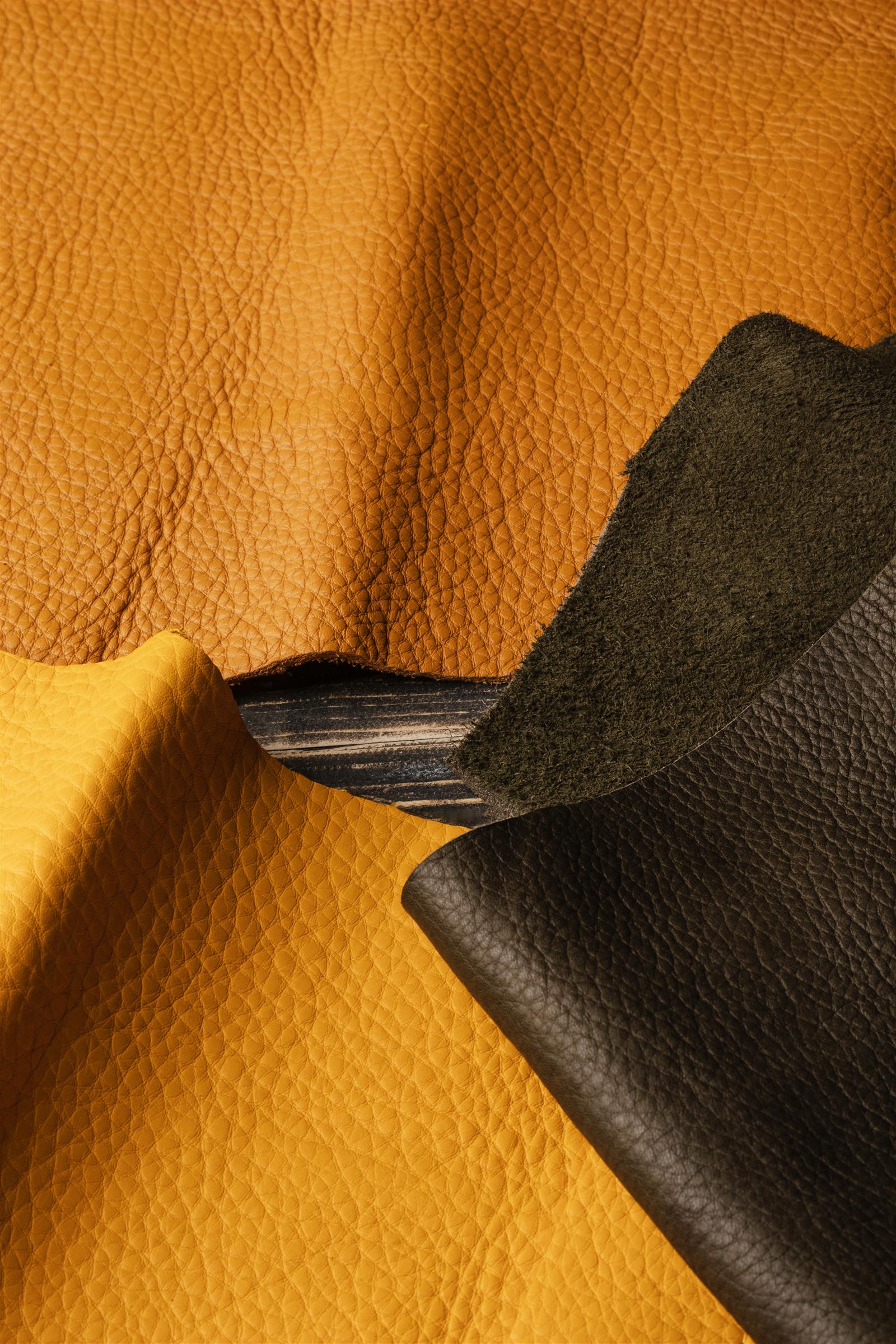
Walk into any shop and three labels compete for your trust: full-grain, top-grain, genuine leather. They sound like siblings. They are not. Here is what each one actually is, from the maker’s side of the bench.
A hide has layers
Think of a hide as a cross-section. The very top — where the animal met the world — is the grain: dense, tight fibres, scars and all. Below it the fibres loosen into the corium, soft and weak. Every leather label is really telling you which layer you’re buying.
Full-grain: the whole truth
Full-grain is the intact top layer, nothing sanded away. It is the strongest cut there is, and the only one that ages instead of wearing out: sunlight, handling and time deepen its colour into patina. Scars and insect bites stay visible — that is not a flaw, it is provenance. Everything at Paz is full-grain.
Top-grain: politely corrected
Sand off the top few tenths of a millimetre and you get top-grain: more uniform, easier to dye consistently, slightly weaker. Most luxury factory goods use it because it photographs well. It ages politely rather than beautifully — the coating that replaces the natural grain eventually wears through.
“Genuine leather”: real in name only
Here is the honest part: genuine leather is a legal description, not a compliment. It is what remains once the good layers are gone — split fibres, often glued and stamped with a fake grain, sealed under paint. It cracks where full-grain would only crease. If a product’s proudest claim is that its leather is genuine, read that as a warning.
Tannage matters as much as the cut
- Vegetable tanning uses oak and mimosa bark over weeks or months. It smells warm, burnishes to a shine, and develops patina. It is the slow option — and the one we choose.
- Chrome tanning takes about a day, stays soft and uniform forever, and never truly ages. Nearly all fast fashion leather is chrome.
The four-second shop test
- Smell it. Veg-tan smells of wood and honey; heavy coating smells of plastic.
- Look at the cut edge. Layered, fibrous edge = real structure. Perfectly smooth = paint.
- Look closely at the grain. Repeating identical pores = stamped pattern.
- Crease it gently. Full-grain creases fine and recovers; coated splits show a white line.
Buy the material that plans to outlive the receipt. That is the whole philosophy.
Further reading
- The leather burn test: what it actually proves, and what it cannot
- Natural marks on leather: where each one came from, and which ones are actually faults
- Suede and nubuck care: why everything that feeds smooth leather ruins nap
- Aniline, semi-aniline, pigmented: what a leather’s finish actually decides
- Leather thickness: what an ounce means, and why thicker is not better
- Why is my leather peeling? Real leather doesn’t — coatings do
- What is full-grain leather, really? A maker’s anatomy lesson
- How to care for handmade leather: the complete guide
- The leather glossary — 18 terms explained